560 Railroad St., St. Johnsbury, Vermont

The Northern Forest Center redeveloped the historic Bertrand’s Hall into nine middle-market apartments and two commercial spaces in a $5.9 million project that helped address the community’s modern-day housing needs.

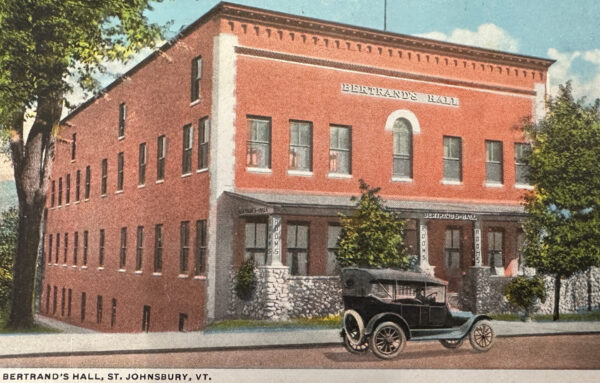
Historic rendering of 560 Railroad St.

Redevelopment 

In 2022, the Center purchased the historic 15,000-square-foot Bertrand’s Hall at 560 Railroad St. as part of its community revitalization work in St. Johnsbury. The property was built in 1909 by J.E. Bertrand to serve as the armory for Company D of the Vermont National Guard. The building’s construction used an unusual technique of “hanging” the second floor from above rather than supporting it from below to keep the first-floor space wide open. This allowed the first floor to be used for Guard training as well as dances and events. Later, the building was converted into a hotel.

To serve today’s St. Johnsbury residents, the Center repurposed the building into nine apartments and two commercial units. Redevelopment began in late 2023, and the renovation included all new electrical, plumbing, heating & cooling, insulation, windows, doors, and finishes. The refreshed building, completed in 2025, has modern amenities with historical character.

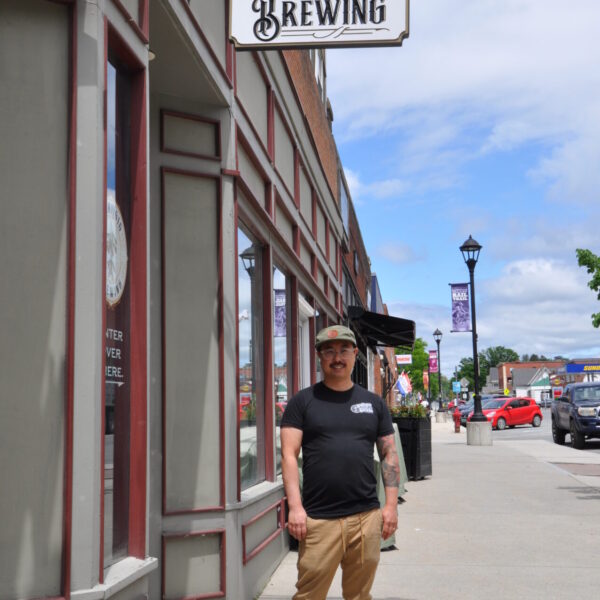
Housing is a major challenge across St. Johnsbury and the entire region. What the Northern Forest Center is doing—delivering housing that wouldn’t have been built otherwise—is unique and innovative. And it’s making a real difference.”

– Geoff Sewake, Owner, Whirligig Brewing
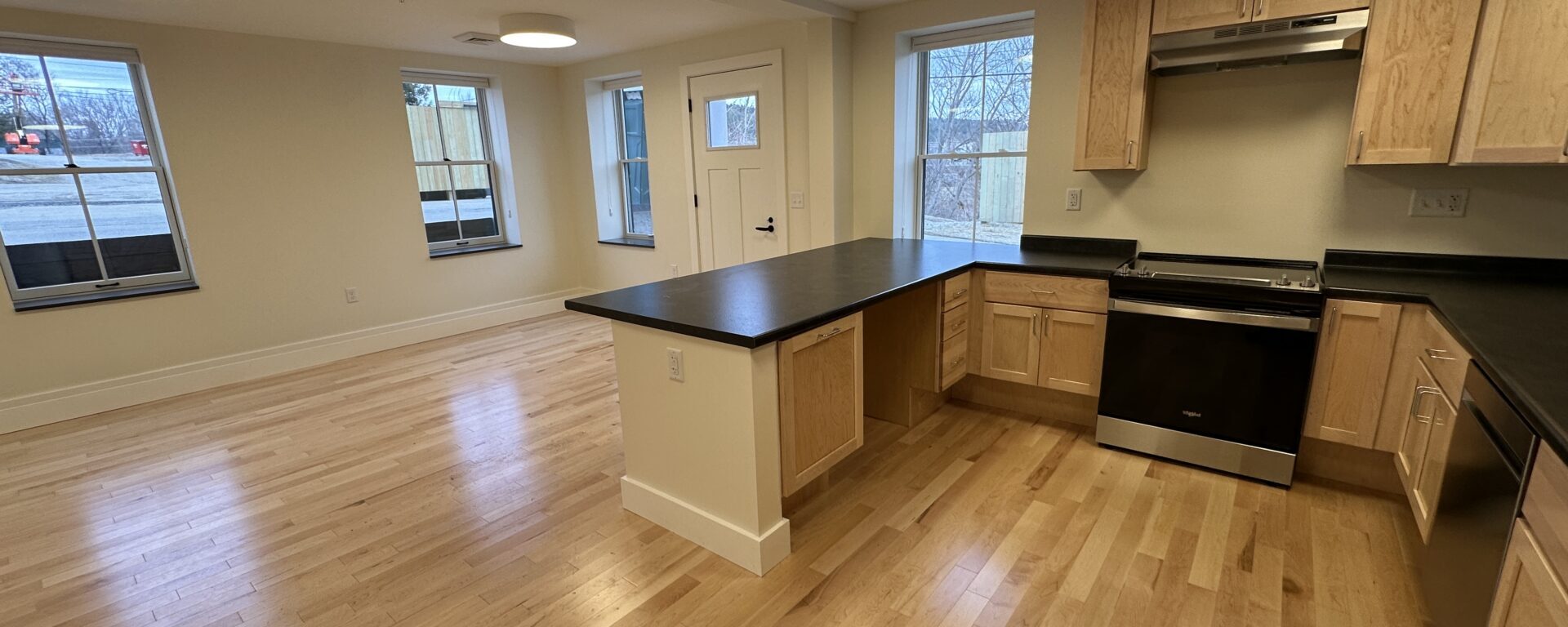
An apartment at 560 Railroad St.

Apartments and Commercial Units

Today, the refreshed building brings modern amenities together with historical character in a great downtown location. Apartments have a standard one-year lease. The apartments do not require income-based qualification. We use area median income and research on St. Johnsbury-area salaries to determine rental rates.

One commercial unit hosts an artist-in-residence in collaboration with Catamount Arts, located down the street, and the other houses Tunnel Books.

The Center will manage the property for several years to recoup our investment. The Center will then sell the property with covenants as condominiums to individuals or as a whole building to a like-minded property manager.

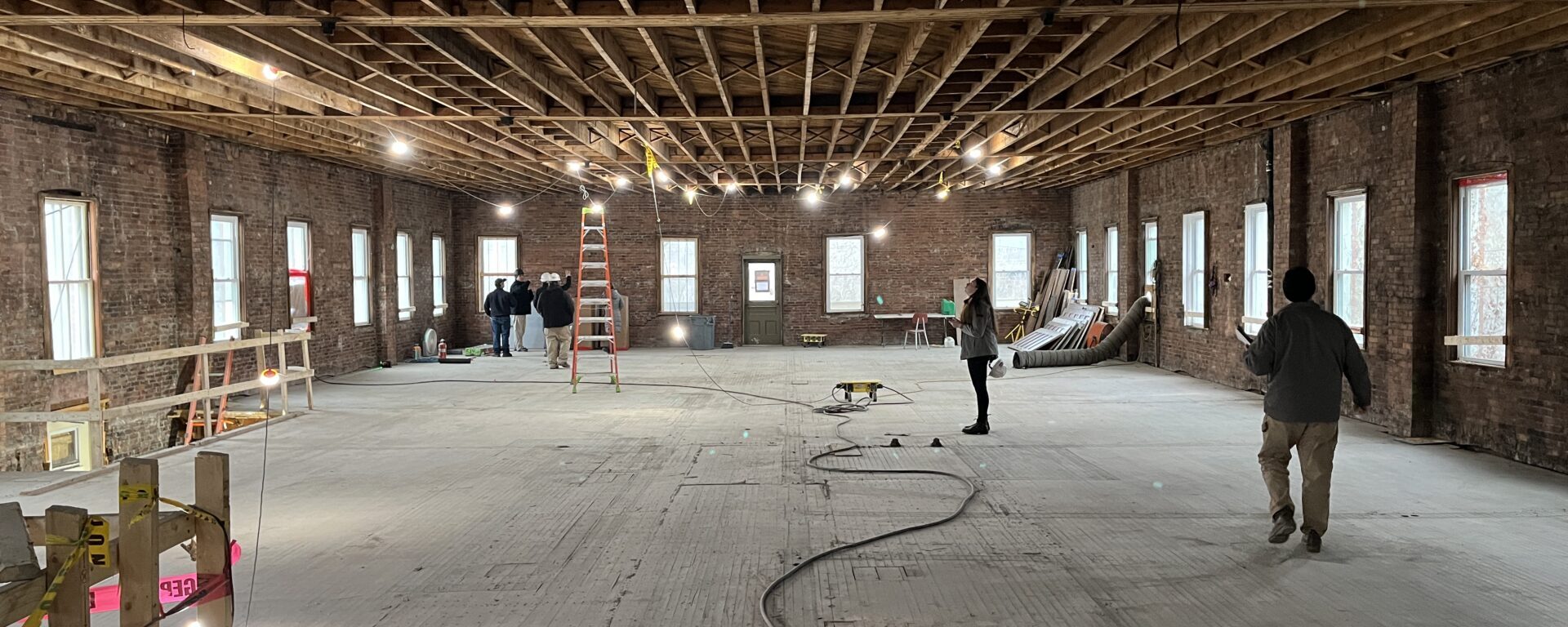
The interior of a large, historic building under construction
560 Railroad St. in St. Johnsbury under construction.

Built by Wood

Wood – old and new – is a focal point of the project. We use our housing projects to support forest stewardship and the regional forest economy wherever possible. The Center prioritized the reuse of existing building materials where possible before buying new materials. In doing so, the Center extended the life of carbon stored within the building’s existing wood products.

The construction crew reclaimed 10,000 square feet of existing birch and maple wood floors as part of its goal to protect the historic character of the building and reduce demolition waste.  An additional 2,500 square feet of new maple wood floors were procured from Lauzon in Québec, Canada. Collectively, the reclaimed and new hardwood floors will store 2,387 metric tons of greenhouse gas equivalents – roughly the amount of carbon sequestered in over 4,200 acres of Northern Forest in a given year.

The Northern Forest Center’s Method

To help address the housing crisis in Northern Forest communities, we broadened our suite of programs in 2017 to include property development. We focus on downtown properties that have the ability to catalyze community redevelopment and revitalization.

With our innovative model, we use a blend of philanthropy, private capital, tax credits and local insight to unlock projects traditional developers can’t.  The Railroad Street redevelopment project received strong public sector support, including a $150,000 “transformational grant” from the town of St. Johnsbury from its American Rescue Plan Act funds; a $500,000 low-interest loan from the Vermont State Treasurer’s Office Local Investment Program; and support from the Northern Border Regional Commission. 

The Center also used capital from its Northern Forest Fund – which integrates private investment dollars, philanthropic donations, and grants from public sources – to fund the purchase and cover initial redevelopment expenses. The Northeastern Vermont Development Association-led Brownfields Assessment Coalition made an important contribution by funding more than $64,000 of early environmental assessment work. 

Other funders include Canaday Family Charitable Trust, Efficiency Vermont, The Freeman Foundation, Hoehl Family Foundation, Northern Border Regional Commission, Vermont Agency of Commerce & Community Development, Vermont Community Foundation, Vermont Department of Environmental Conservation, Vermont State Employees Credit Union, and individuals who have contributed to the Center’s Northern Forest Fund or to the project specifically.  

Staff Contact

Mike Morin

Vermont/New Hampshire Program Director
Cell: 720-624-6051

Kristen Sharpless

Director of Development
Cell: 603-568-0347