
New Hampshire forestland owners appreciate the market that wood heat creates for wood taken out during stewardship.
The Basics
-
Why is the Northern Forest Center promoting wood heat?
Modern wood heat – highly-efficient, clean-burning systems – deliver direct economic, environmental, and community benefits. Wood heat keeps dollars circulating within the region’s economy and helps sustain forest economy jobs. Switching from fossil fuels to efficient wood heat also cuts greenhouse gas emissions. And increased demand for wood pellets and chips creates a stronger market for the byproducts of good forestry, helping landowners offset the costs of long-term stewardship. No other renewable heat source provides such broad benefits!
About Automated Wood Heat
-
What’s Automated Wood Heat?
Automated Wood Heat is a convenient, clean, simple way to heat with wood pellets or chips. These centralized, whole-building heating systems can directly replace traditional oil or propane boilers or furnaces. Pellets are delivered in bulk to a large hopper or silo and called to the boiler by a touch of your thermostat. Maintenance for the average homeowner amount to emptying ash from a small container a few times a year. The ash can be spread on your garden, just like fireplace or wood stove ashes. Watch this animation to see the journey from forest to warm home.
-
How is Automated Wood Heat different from other types of wood heat, like pellet stoves or wood stoves?
Automated pellet or chip boilers require almost no hands-on maintenance by the building owner. Depending on building size and heat demand, they can run for weeks with no intervention. There’s no cordwood to move and no pellet bags to haul. Also, their advanced combustion systems make these systems significantly more efficient and clean-burning than other wood heating options.
-
What are the main advantages of Automated Wood Heat?
- Local Economic Benefits: 78% of money spent on oil leaves the region, while almost 100% of spending on Northern Forest pellets stays here. Heating with Northern Forest wood pellets creates and sustains jobs in the forest economy and cuts heating costs, keeping more dollars in our communities.
- Renewable: Our forests are growing more than they’re being harvested. Northern Forest wood pellets are inherently renewable.
- Fuel Cost and Stability: The cost of wood pellets is far more stable than fossil fuels, making budgeting easier, and it’s controlled by local decisionmakers instead of geopolitics. Oover the past few years, the price of pellets has averaged about 30% less than the cost of heating oil.
- Consumer Convenience: Automated wood heating systems are just that – automated. Fuel is delivered in bulk from a specialized truck – just like an oil truck – to large hoppers or silos that directly feed your boiler or furnace as regulated by a standard thermostat. No fuel handling is involved, and maintenance is minimal.
- Carbon Footprint: Switching from heating oil to Northern Forest wood pellets immediately cuts greenhouse gases by 54% from day one. Learn more in this lifecycle analysis.
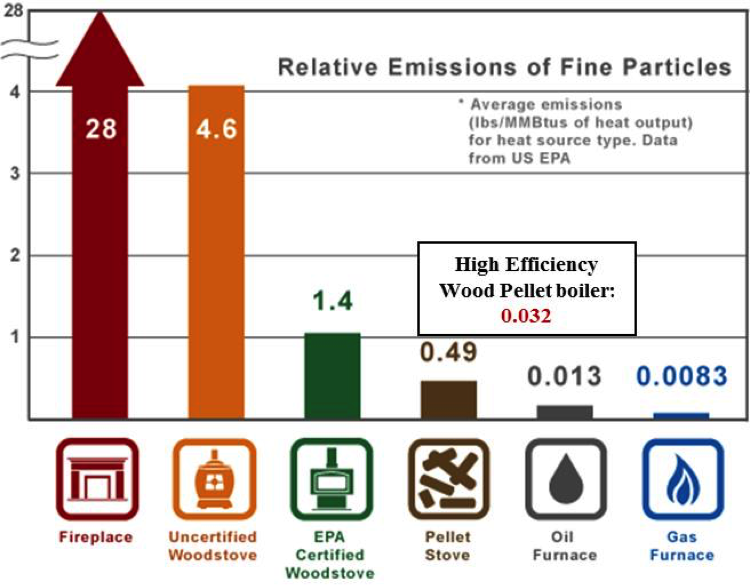
- Particulate Emissions: Modern wood heating systems, like Automated Wood Heat, are exponentially cleaner burning than outdoor wood boilers or wood stoves.
The Heating Systems
-
Are these systems proven to work?
Automated Wood Heat has been common in Europe for over a decade in buildings of all kinds, and there are well over 1,000 in the Northeast in every building type – from small houses to multi-families to large schools to manufacturing facilities.
-
How much maintenance does Automated Wood Heat require?
Building owners need to empty a small ash box for every few tons of pellets burned – for homeowners, this is every 3-4 weeks during heating season. As with all heating systems, annual service from a professional technician is advised.
-
Can I keep my oil or propane boiler?
Yes, if your space allows.
-
What if I have a steam or forced hot air distribution system?
Most pellet boiler models are designed for hot water distribution, but at least one automated wood pellet furnace is available and some systems can be adapted for steam distribution. Local boiler vendors will be able to tell you what options exist for your home – click here to find experts near you.
-
Can a pellet boiler heat my hot water too?
Yes, it is often connected to a domestic hot water tank.
-
When are wood chip systems appropriate instead of pellets?
Pellet systems are most economical for residences and small commercial-scale buildings. At a larger scale, it becomes more cost-effective to use wood chip heating systems. “Semi-dry” chips available in some areas are an alternative for buildings that fall into the middle range.
Health & Environment
-
What about the environmental costs of heating with wood?
All heating systems have some environmental impact, and we think it’s important to be transparent about the impacts of wood heat so that consumers can make informed decisions.
-
What are the carbon impacts of heating with wood?
Wood heat has a significantly lower carbon impact than fossil fuels. Accurate carbon accounting must consider factors such as time, land use change, forest management practices, and the type of fuel being displaced by biomass. Our blog post “Greenhouse Gases and Wood Pellet Heat” addresses this issue head-on.
-
Are there air quality issues with heating with wood?
Modern wood heating appliances have pollution controls and high efficiency ratings that minimize negative health effects – the chart below shows how they compare to other forms of wood heat. Some forms of wood heat – particularly older, inefficient wood stoves and outdoor wood boilers – can cause air quality and health problems, as described by the EPA.
-
Are forests being sustainably harvested to supply wood for heat?
Forests in this region are never harvested just for wood energy. Wood used for heat is almost entirely either low-grade wood removed as part of an overall forest stewardship plan or a byproduct from wood products processing (like sawdust from a mill).
As for sustainable forestry in general, many lands are harvested in accordance with forest management plans, but sustainability is hard to quantify across the board.
Several pellet manufacturers use Forest Stewardship Council (FSC) or other third-party certifications to ensure that, for at least a portion of the feedstock for their mills, the forests producing wood for the pellets are harvested sustainably. Other mills monitor their supply independently. Foresters generally strive to comply with states’ best management practices (BMPs), which were designed to protect water quality. Some states have also developed biomass harvesting guidelines but have not set mandatory standards.
In general, characteristics of sustainable forestry include long-term planning, minimizing the environmental impact of logging operations, and harvesting with biological diversity, soil productivity, and water quality in mind. A forest that is sustainably managed retains its ecological and economic value over time – logging does not compromise its long-term viability. A 2011 Yale Forest Forum publication discusses this concept in greater depth as it relates to wood energy.
-
Will there be enough wood for pellet heat in the long run?
Wood could not sustainably heat the entire Northeast, but it could be used much more widely than it is now. A 2010 report by the Biomass Thermal Energy Council estimated conservatively that 18.5% of the northeastern U.S. could be heated with wood without over-taxing native forests; currently only 4% of heat in the region comes from wood.
Overall, growth exceeds harvest in the Northeastern states – that is, forests are growing by volume more than they are being harvested. State reports released by the North East State Foresters Association provide detail.
-
How does wood heat compare to wood-based electricity?
Using wood for heat is more efficient than using it for electricity. Pellet boilers have a maximum combustion efficiency of 85%, while burning wood in an electric power plant is less than 25% efficient. (This isn’t the fault of wood: electricity production from any fuel is inherently inefficient.) That said, wood electric plants are a critical market for low-grade wood, helping sustain the forest economy overall. It will take much more wood heat demand – or perhaps new uses of low-grade wood – to displace wood electric plants as an important element of the forest economy.
-
How does Automated Wood Heat compare to heat pumps?
Many people concerned about climate change are turning to electric heat pumps. But the climate impact of heat pumps depends on the electricity source. Solar panels provide renewable energy to run heat pumps, but electricity from the grid generally relies on several sources of energy, now all of which are low-carbon. Also, heat pumps may not be sufficient as a whole-building heating option year-round; they often require supplemental fossil fuel systems. Automated Wood Heat is a truly renewable option that serves whole buildings with no need for backup heating systems.
Choosing and Paying for a System
-
How do I find an Automated Wood Heat system?
See https://feelgoodheat.org/find-experts-index to learn about options and find an expert.
-
What should I consider when choosing a pellet boiler brands?
Some boiler types require more hands-on cleaning than others. Safety features, online monitoring capability, burner design, and combustion controls also vary. Also consider how long the boiler has been on the market in Europe and the U.S. and how much experience the installer has. Distributors and installers will be able to explain what distinguishes their product from the others.
-
Who will install and maintain the system?
Boiler distributors have trained installers across the Northeast. Contact the distributors to find the installers nearest you: https://feelgoodheat.org/find-experts-index. The installer typically can provide maintenance services as well.
-
Does home insurance cover pellet boilers?
The U.S. Department of Housing and Urban Development classifies wood pellet boilers as a “conventional, primary heating source” eligible for Federal Housing Authority funding – an important signal to the marketplace that these are not risky appliances. Some insurers remain leery of wood pellet boilers because they aren’t familiar with the technology, but as they learn how Automated Wood Heat works, more insurers are covering them. You may want to double-check with your insurance provider to ensure that it covers the pellet boiler as a primary heating source; if not, the boiler distributor or installer should be able to direct you to a willing insurer.
-
How much does a pellet boiler cost?
Installation costs vary greatly by project based on factors such as basement and existing heating system conditions, and additional features (e.g. thermal storage tanks to improve efficiency or different types of pellet storage). Read below about incentives that can help reduce the total cost of a pellet boiler system.
-
Are there special programs or loans to help pay for a pellet boiler?
There are more incentives for wood heat than ever before, and the Center continues to advocate for additional state and federal funding. Each Northern Forest state offers financial incentives for wood pellet boilers – look for your state and links to its incentives at https://feelgoodheat.org/find-experts-index.
Pellets
-
Where do the pellets come from?
Pellet mills are located across the Northern Forest and range in output from about 30,000 to 100,000 tons of pellets per year.
-
What kind of wood is used in pellets?
Both hardwood and softwood can be used, and the wood comes from many different sources. The wood is typically “low-grade” – that is, lower quality than what’s used for other wood products (like furniture or lumber). Sawdust and wood chips can also be processed into pellets. Northeastern forests are never harvested just for energy uses because the material has such low value – the wood used for pellets or chips is a secondary product from forests harvested for more valuable wood. See below for more information about biomass harvesting.
-
How are pellets made?
Raw wood or sawdust is processed in mills and dryers before being pressed through high-pressure dies to create pellets of uniform size and moisture level. Natural lignins released in the process are what hold each pellet together, not plastics or other additives. Pellets in the Northeast contain almost 100% raw wood, with a very small amount of food-grade oil added sometimes as a lubricant. There’s no recycled wood content that could contain contaminants. Regular testing at each mill confirms that their pellets are “pure.”
-
What are premium pellets?
There are two different grades of pellets. “Premium” pellets have less than 1% ash content and make up about 95% of pellets on the market, while standard pellets have less than 3% ash and can only be used in systems designed to accommodate higher ash content. Tree bark and agricultural residues in pellets are what typically increase the amount of ash, according to the Pellet Fuels Institute (PFI). Most pellet mills test their own products to demonstrate compliance with Pellet Fuel Institute standards; some have been third-party certified and allowed to use the PFI Quality Mark.
-
Who delivers pellets in bulk?
Check out https://feelgoodheat.org/find-experts-index to find delivery experts near you.
-
Where would I store the pellets?
Pellets are usually stored in fabric, steel or wood bins in a basement or garage, or in outdoor silos. Installers will help you determine the best storage solution for your home or facility
-
Can I use grass or some other kind of pellets?
No. Only premium wood pellets can be used in automated wood pellet boilers.
-
Are pellet prices stable?
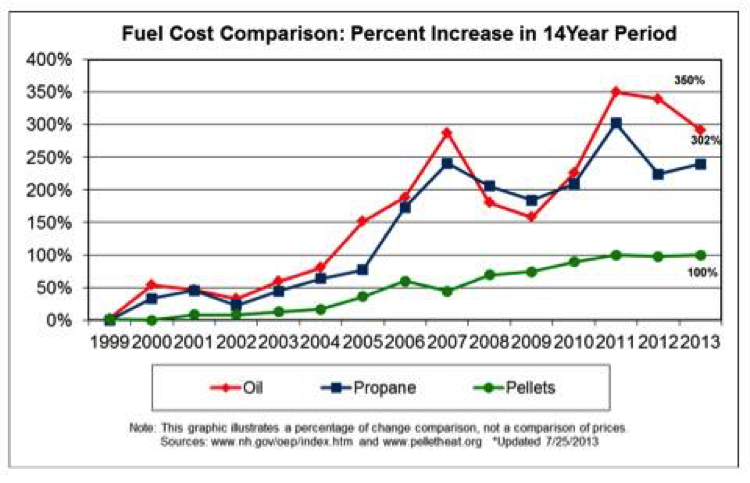
Prices have been significantly more stable than fossil fuels for over a decade. The cost increased by 100% from 1999 to 2013 while oil increased by 350% and propane by 302%, as shown in this graph.
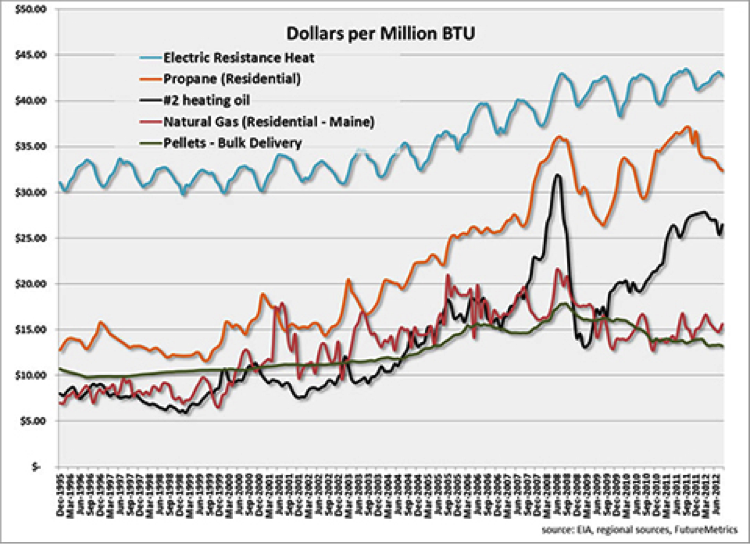
Pellets have been consistently less expensive than oil, propane, or electric heat, as shown in this graph. At times, they have also been more affordable than natural gas.
Staff Contacts