Bike Borderlands partners on group bike ride.
Fun, Shared Learning, and Dedication Build Bike Borderlands Success
I think there’s a pretty good case to be made that Bike Borderlands is one of the Center’s most fun initiatives. When else does work include riding mountain bikes together before talking about trails and community impact over delicious tacos? Even better, the Bike Borderlands initiative has generated huge benefits for the member networks and their communities.
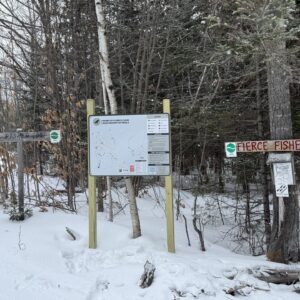
For seven years, with leadership from the Center, representatives of eight independent trail organizations have been working together regularly to strengthen and promote mountain biking in their communities. A combination of formal and informal time together – typically starting with a meeting, moving to a group ride at one of the networks, and ending at a local brewery – has produced extraordinary relationships among Borderlands partners that persist despite the distance between locations and disparities among groups.
While originally the Borderlands group was interested primarily in attracting riders from away – collectively making the region a mountain biking destination – the members’ focus shifted over time to a more community-centered vision.
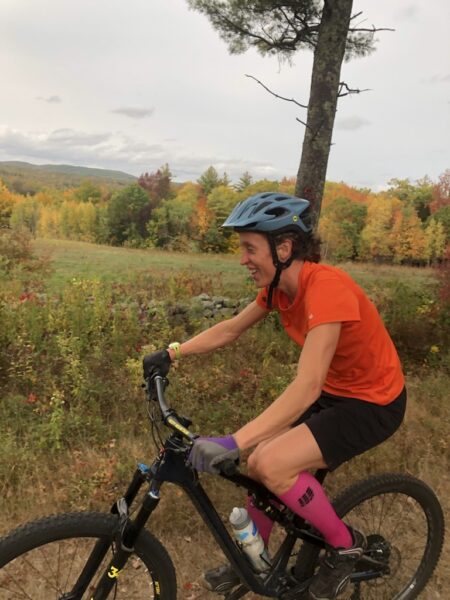
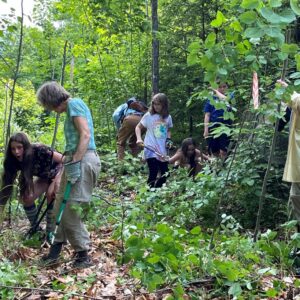
The result is more local people riding or otherwise using the trails (which are open to other non-motorized users), more local volunteer days, more landowner engagement, and more active outdoor programming for local kids and families – all making trails more accessible and the organizations more relevant and responsive.
The Center has played numerous roles in Bike Borderlands since co-founding the initiative in 2017. We foster important relationships and peer learning through facilitated meetings and retreats. We run social media accounts and newsletters to increase awareness of Borderlands networks and events. We manage the Ride With Gratitude campaign, created by the Borderlands groups to build a more respectful mountain biking culture. We attend mountain biking events to spread the word about this work, and we organize learning sessions and clinics for both Borderlands partners and other groups.
We’ve also raised well over $500,000 to allocate to Borderlands members for their priority projects, which has shown us a lot about what it takes to make a successful trail network. “More trails” is not always what groups need most – they’re well aware of their own limits. Instead of always building new trails, they’ve often sought funds to repair existing trails or bridges, improve signage or maps, establish fleets of bikes for use in kids’ programs, or deliver youth camps – projects that improve safety, sustainability, and accessibility.
Sustained funding has been critical to this group’s success. We’ve secured grants from USDA Rural Development and several private foundations, including, most consistently, You Have Our Trust. Their ongoing commitment to this work has allowed my Center colleagues and me to make the initiative a priority. Many funders shy away from paying for staff time, but the time of knowledgeable staff is what’s often needed to make transformational projects occur. (Read more about why it’s so important to “bring capacity” in this blog.)
I’m thrilled when I see a Bike Borderlands sticker on a truck at a mountain biking trailhead, ride a trail that I know is better because of our work, or hear someone in southern New Hampshire talking about how much fun they had at one of the lesser-known Borderlands networks.
And I love seeing our Borderlands partners come together – whether for a ride, a brainstorm about funny Ride With Gratitude videos to make this spring (stay tuned!), or a heated discussion about the merits of various snow groomers. I’m proud to be part of a program that provides such tangible benefits to individuals and communities, and excited to see how the Borderlands networks get even stronger over the next seven years.