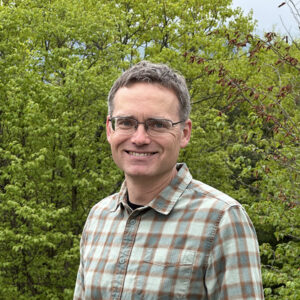
Testing new wood-based packaging at Tanbark in Maine. US Endowment for Forestry and Communities photo
Proposal Could Secure Millions to Advance Innovation in Northern New England’s Forest Economy
Partnership Seeking to Position Region as Global Leader in Forest Products Is 1 of 15 National Finalists in National Science Foundation Competition
A collaborative proposal led by the Northern Forest Center and developed in partnership with higher education, industry, non-profit, and government partners to propel innovation in the regional forest economy is one of 15 initiatives selected nationwide to compete for funding from the National Science Foundation (NSF) Regional Innovation Engines program.
The proposal – dubbed Northern New England Precision Forest Management and Advanced Forest Bioproducts Engine (NNE-PROMISE) – focuses on Maine, New Hampshire, and Vermont, states which on average are 85% forested.
Making the Region a Global Leader
The partnership and proposed investment seek to position the region as a global leader in the forest products sector by advancing research, development, and commercialization of precision forest management and forest-based bioproducts.
“Our coalition and region are uniquely suited to advance these technologies to benefit the U.S. Forest economy and the rural communities that depend on it,” said Rob Riley, president of the Northern Forest Center, which has facilitated the collaboration since 2023.
“We are grateful for this recognition of the innovative potential of forestry and forest products to improve American competitiveness, revitalize domestic manufacturing, and reduce reliance on imported goods,” said Riley. “Our partnership is ready and eager to advance innovations that support the forest economy if we are selected for funding.” If awarded, the NSF Engines designation would grant $15 million over two years for workforce development, product research and development, and commercialization to support increased innovation and rural economic development outcomes in forest industries in the region. The grant award would create the opportunity for subsequent NSF investments in the engine concept over 10 years.
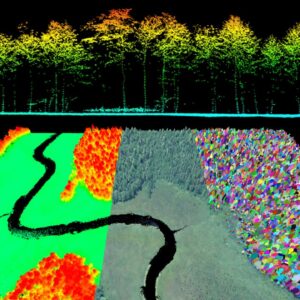
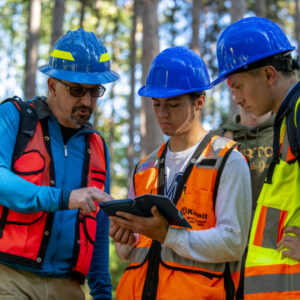
One emphasis of the proposed work is to bring new technologies to market that landowners and foresters can use to maintain and improve the resilience, productivity, and economic outputs of the 25 million acres of forest that span the three states. “Remote sensing technologies like LiDAR and UAV-based platforms are still evolving yet can significantly help forest professionals address natural resource health concerns like our current spruce budworm outbreak in northern Maine while increasing wood supply, improving harvest operations, and accessing new markets,” said University of Maine Professor Dr. Aaron Weiskittel.
A second emphasis is on innovating new products derived from wood that create business opportunities and manufacturing jobs in rural communities while providing goods and services drawn from domestic and renewable forest resources.
“Examples of catalytic efforts underway in this region include wood fiber insulation as an alternative to fiberglass, advanced molded fiber packaging for consumer products in place of single-use plastics, biodegradable medical textiles instead of polyester resins, and 3D-printed wood-fiber structures as substitutes for traditional steel or concrete buildings. NSF’s investment would accelerate these advancements promoting regional innovation and economic growth,” said Alicia Cramer, chief operating officer at the U.S. Endowment for Forestry and Communities.
Along with the Northern Forest Center, core NNE-PROMISE partners include the Universities of Maine, New Hampshire, and Vermont, Dartmouth College, Maine Development Foundation, Vermont Sustainable Jobs Fund, and the U.S. Endowment for Forestry & Communities. The coalition grew and refined the Engine concept with support from a planning grant secured from NSF in 2023; the current proposal would launch it into full implementation.
The NSF Engines program aims to support multiple flourishing regional innovation ecosystems across the U.S., spurring economic growth in regions that have not fully participated in the technology boom of the past few decades. To date, the program has invested $135 million across nine NSF Engines and leveraged more than $1 billion in matching commitments from private industry, philanthropy, and state and local governments.
Coalition Partners Add Expertise to NNE-PROMISE
Maine
“We’re excited to be part of the Engine, which represents a powerful opportunity to align innovation with workforce development across the region. As a nonprofit focused on strengthening communities for economic prosperity, our role in building more coordinated education and training pathways is central to ensuring that people can access meaningful careers in the forest products sector. Expanding on the industry-led efforts of FOR/Maine, this collaboration will not only expand opportunities for individuals across rural Northern New England but also strengthen our organization’s ability to drive long-term economic resilience in the communities we serve,” said Erica Watson, senior program director of Education & Workforce with the Maine Development Foundation.
New Hampshire
“Dartmouth is honored to be part of the Northern Forests Regional Innovation Engine finalist team,” said Provost Santiago Schnell of Dartmouth College. “Our Second College Land Grant will serve as a test bed for creative approaches to help build a resilient forestry economy for the future. As new ideas emerge, Dartmouth’s Magnuson Center for Entrepreneurship, our Technology Transfer Office, and the Tuck School of Business will help accelerate that innovation into sustainable, real-world impact for rural communities.”
“With new innovations in precision forestry, we are on the precipice of a new era in sustainable forest management,” said Mark Ducey, UNH professor of Forest Biometrics and Management. “This engine will allow our region to take on a leadership role nationally and internationally.”
“This engine will allow UNH, with our state and regional partners, to continue its instrumental role in developing the future forest economy workforce and innovative products,” said Andrew Fast, UNH Extension Forest Industry state specialist.
Vermont
“The future of forest products is incredibly promising, and we’re excited to be the new home of the Forest Business Accelerator, the only forest sector specific accelerator of its kind in North America and one of the key components of the Northern New England Promise,” said Christine McGowan, Forest Products Program director of the Vermont Sustainable Jobs Fund. “Open to entrepreneurs across North America, the program is designed for start-up and seed-stage ventures scaling next generation forest technologies and advanced forest bioproducts that we believe will play a significant role transforming our region into a world class forest products innovation ecosystem.”
“We feel fortunate to be a part of this broad partnership that leverages the intellectual capacity and innovation necessary to support and advance rural forest-dependent communities and economies in northern New England,” said Dr. Tony D’Amato, professor and director of UVM’s forestry program and research forests. “This work will enhance UVM’s ability to support forest businesses and landowners in applying precision forestry strategies that increase the resilience and productivity of the region’s forests and further advance local wood systems.”