Morgan Mead Hill
Q&A with board member Morgan Mead Hill
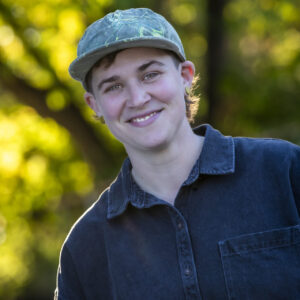
Photo by Nancie Battaglia
Growing a future in the Northern Forest
Morgan Mead Hill is a new member of the Northern Forest Center’s board. A former creative strategist and audio producer, they run Mount Cabot Maple, a small agroforestry business on their family land in New Hampshire’s North Country where they grew up.
Q&A
What made you say yes to the Northern Forest Center board?
I’m a millennial running a small agroforestry business on family land, so I’m in the middle of a fun Venn diagram of the Center’s work. I work with my hands most of the time, so I’m super excited to put other parts of my brain to use on behalf of something way bigger than just my own projects on the farm. I’ve seen the Center bring projects from notion to completion in my hometown, and I’m looking forward to learning so much more about the nuts and bolts of rural development and the theories of change behind how we can improve the well-being of rural communities and our forests.
The Center advocates for forest stewardship across four states. From where you stand in the sugarbush, what should that advocacy be paying the most attention to right now?
As maple sugarmakers, we depend on healthy, biodiverse forests and stable weather patterns. Northern forests are already under a lot of pressure from droughts, storms, warmer winters, and invasives because of climate change. We need smarter regional planning to take better advantage of the resources that forests can offer if thoughtfully tended — not just timber, but food and medicine. Advocating for a paradigm shift in how we see the role of positive human stewardship would cover more than any single silo of concerns. It’s everything from replacing plastics and toxic building materials with wood-based alternatives to cultivating new models of community ownership.
You grew up here, left, and came back. What has to be true about a rural community for people to return or stay?
Returning home for me meant choosing a future rooted in the land that raised me. I knew that my connection to land was a unique opportunity, and rare among my peers — coming home to run a farm business was only possible because of my family’s support. Other young farmers had been interested in Mount Cabot Maple, but the arrangement of land access and the capital required to acquire the business was just not feasible. I’m an outlier in having that, and I think structures to support incubating rural farm and food businesses should be a priority in how we approach redevelopment. Nobody wants to move to a food desert, and local cuisine and the culture built around food and land is core to so many regional identities — I want to make that true of ours!
How do you decide what belongs on Mount Cabot?
I’m still learning that I can’t do everything, and the best future here will be one where other smart, passionate people can join the team here and bring their own projects to life. Much like the Center, I’ve found that supporting humans comes first, so we’re continuing to build on-farm housing as a way to offer both a meaningful job and a land-connected lifestyle to our crew. We’ve experimented with different food and agroforestry projects alongside hospitality and tourism, but every year we just get back to basics and make spectacular maple syrup.