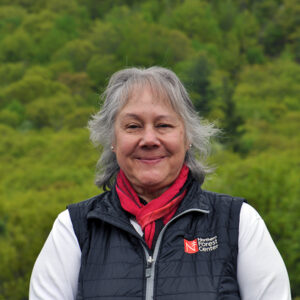
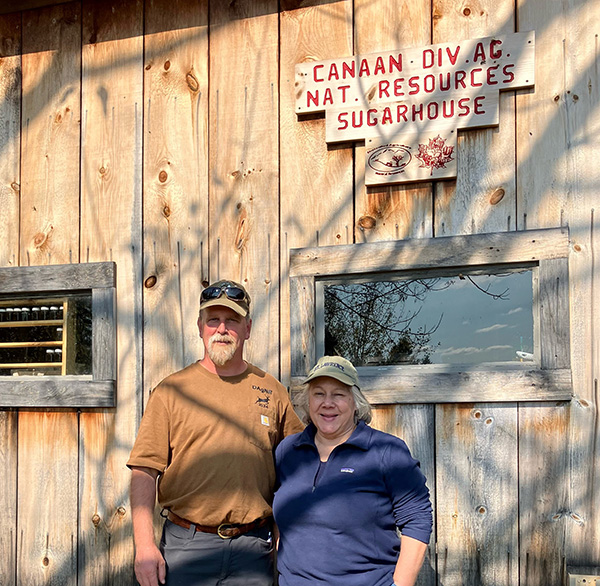
Chris Masson at Canaan Community Forest in Vermont, where students explore forest-based career opportunities.
The dream that nearly wasn’t
Leadership and persistence bring a Community Forest to life
Fifteen years ago, the Canaan Community Forest was just an idea.
The Neil Tillotson Trust had offered to donate 424 acres to the rural town of Canaan in the northeastern most corner of Vermont. But the Canaan Selectboard hesitated. A conservation easement came with the offer, and the restrictions made them uneasy. It seemed the opportunity would be lost.
But Chris Masson, who served as Superintendent of the Canaan Schools at the time, and others saw a great opportunity in owning the land.
Chris grew up in Canaan next door to the Tillotson land, left to study forestry at the University of Vermont, and returned to his hometown to teach science and raise his own family. He envisioned the land as a living classroom—a place where students could gain hands-on experience in forestry and agriculture while also gaining practical, entry level job skills. Chris and others who saw the potential benefits of the town owning the land knew it would take persistence, collaboration, and the right partners to make this dream a reality.
With staff support of the Northern Forest Center, the Vermont Land Trust, and the Tillotson Foundation, the conversation shifted. Slowly, the broader community began to see the potential, and two years later, Canaan accepted the gift, turning the parcel into the Canaan Community Forest.
Living classroom, place of pride
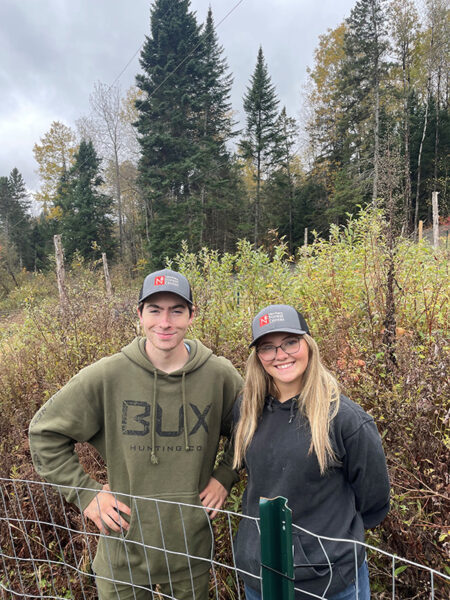
Several years ago, Chris left administration and returned to teaching – this time to lead the Diversified Agriculture and Natural Resources Program at Canaan Schools. For more than a decade, the program has been transforming the lives of local high school juniors like George and Leah. Recently, they gathered in Chris’ classroom in the basement of the Canaan School to share their experiences.
George, who is quietly putting the finishing touches on an assignment to create a diorama of a mushroom, loves to hunt and fish and is considering a future as a game warden. Leah chimes in, saying she loves the hands-on nature of Chris’ program. She doesn’t want to sit still, she says—she likes to be outside, learning through doing. She’s thinking about a future in elementary school education.
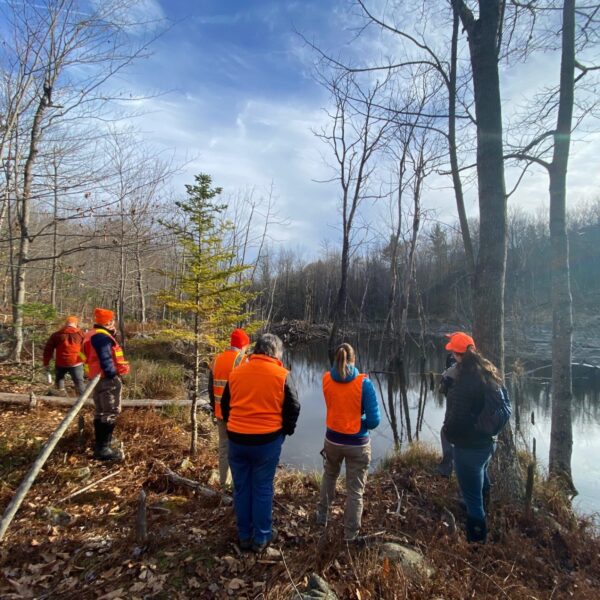
The real classroom, though, isn’t in the school. It’s a mile up the road, in the heart of the Canaan Community Forest, where Chris and his students spend every afternoon in the woods.
Under his guidance, the students learn to operate a portable sawmill to mill lumber from trees they’ve felled while getting their chainsaw safety certifications. They tend beehives, tap maple trees for syrup, grow shiitake mushrooms, and raise rabbits and chickens. They sell the products they make—honey, syrup, winter wreaths, meat birds—to the community, integrating lessons in entrepreneurship with forestry and agriculture.
The forest isn’t just a place to learn job skills—it’s a place where students build a deeper connection to the land and their community. It’s also a place of pride. Chris points out the pole barn that the students built themselves, a new animal barn under construction, and the sugarhouse they use during maple sugaring season and as a wood shop all year. Their work is visible, and their accomplishments are real.
Foundation for the future
The impact doesn’t stop at the forest’s edge. Chris has taken students to career days, competitions and conferences, introducing them to employers in industries from welding to farming to forest businesses. He’s helping them see that the skills they’re learning in the forest are the foundation for careers that could allow them to stay in the North Country and build a future for themselves after graduation.
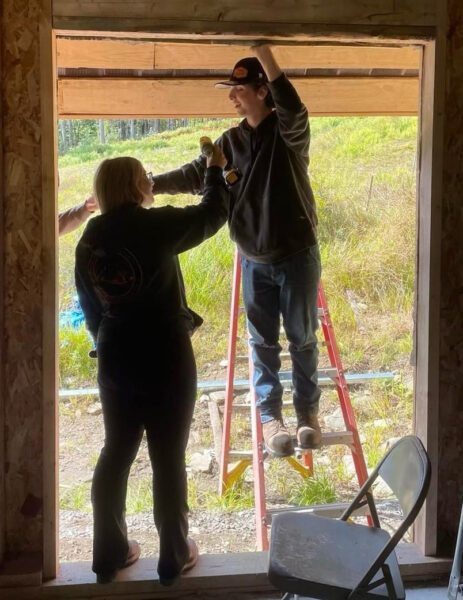
Vaughn, a recent graduate who is in his first year at White Mountains Community College, talked about how the program helped him get a head start in welding. Some students, Chris says, have credited the program with setting them on a successful path and keeping them in school when they were at risk of dropping out.
The community, too, has begun to embrace the forest as a shared resource. Local families come out for community events like Family Day, where they walk the 3-mile loop trail and explore the woods where their children are learning. Volunteers are organizing more family-friendly activities, like a fairy house-building event, and the forest is becoming a central part of the town’s identity.
Collaboration is key
None of this would have been possible without the collaboration and support that helped bring the forest to life. As Chris explains, without the support of Program Director Julie Renaud Evans from the Center, as well as the Vermont Land Trust and the Tillotson Foundation, the town would have turned down the donation. But now, the Canaan Community Forest is a thriving hub of education, community, and opportunity.
It’s a place where students like George, Leah, and Vaughn are gaining the skills and confidence to shape their own futures, all while deepening their connection to the land and their community. And it all started with a vision—one that has grown beyond anyone’s expectations.
Read more about the Community Forest’s history.
Learn more about Canaan Diversified Ag and Natural Resources Program and the Canaan Community Forest online.