
Elizabethtown, NY, needs a wastewater treatment system to support housing development, businesses, and community growth.
Wastewater System is Essential to Community Growth in Elizabethtown, NY
With help from the Center, Elizabethtown, NY, has landed a grant from the Northern Border Regional Commission (NBRC) that puts the town on the path to building a new wastewater treatment system. The $500,000 grant, announced in December, allows the town to continue investing in the design work required to fund and construct this critical infrastructure.
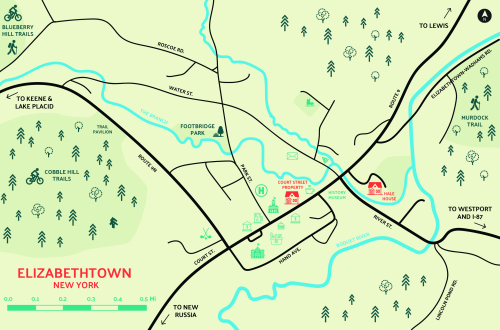
Elizabethtown is the county seat for Essex County, home to government offices, a hospital, a school, restaurants, a grocery store, and hundreds of homes – but no sewer. As private septic systems reach capacity and experience costly failures, community leaders, businesses, and key services such as the hospital highlight the lack of a wastewater treatment system as a damper on growth. Meanwhile, failing septic systems risk the waterways that make Elizabethtown special. The Town is sensitive to these needs, but in the past, hasn’t been able to make this complicated, expensive infrastructure project happen.
“Wastewater is a must-have for our community,” says Town Supervisor Cathy Reusser. “Protecting our rivers and ensuring that our town can thrive long into the future isn’t a matter of ‘if’ but ‘when’, and we are finally on track to make this project happen.”
Restarting the Effort
In 2022, new funding through the federal Bipartisan Infrastructure Law provided billions of new dollars for wastewater projects and a new impetus for Elizabethtown’s efforts. Center staff worked with Jeff Allott, a town councilperson, to reorganize the project and bring stakeholders together to regain momentum.
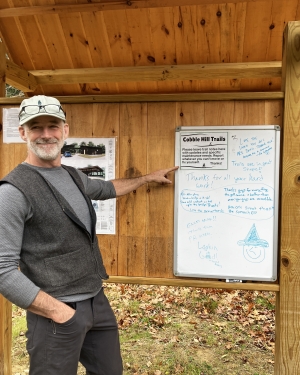
“This project was dead in the water until the Center showed up,” said Allott. “The wastewater treatment project has been going on for almost 20 years with next to no progress and honestly, in the last two years it finally feels like it’s going to take wing. One hundred percent of the credit goes to the Northern Forest Center for that.”
Getting the project rekindled was only step one. Soon it became apparent that funding the estimated $36 million project in a town of only about 1,000 people would require savvy navigation of state and federal grant opportunities, discussions with agency heads and political leaders, and a lot of patience.
“Too often, small Adirondack towns lack the dedicated staff or the knowledge to navigate a process like this and often must lean on paid consultants,” said Leslie Karasin, the Center’s Adirondack Program Director. “The support we provided in the early stages of rekindling this project helped to create a willingness from the town, the county, and other partners to expend their own time and energy to help move this forward.”
Finding the Funding
To qualify for millions of dollars in grant funds, the town had to show both the need for financial support and the potential for water quality improvement through the project. The first big hurdle was to qualify for hardship funding by showing the economic need of town residents.
Suspecting that income data from the US Census was not giving an accurate report of income levels among the residents in the potential wastewater district, the Center led a door-to-door survey with support from local volunteers. The survey received responses from more than 70% of the districts’ households and showed a median income of $34,549, significantly less than the $60,000 estimated by the Census. This lower income level qualified the project for hardship funding.
“It’s not easy to jump through the hoops of an approved income survey, but without the survey, we could see this project was at a total impasse,” said Karasin. “With help from our partners and the participation of the residents of the district, we were able to make the case. That speaks volumes about the need and desire to see this project happen.”
Documenting Water Quality Issues
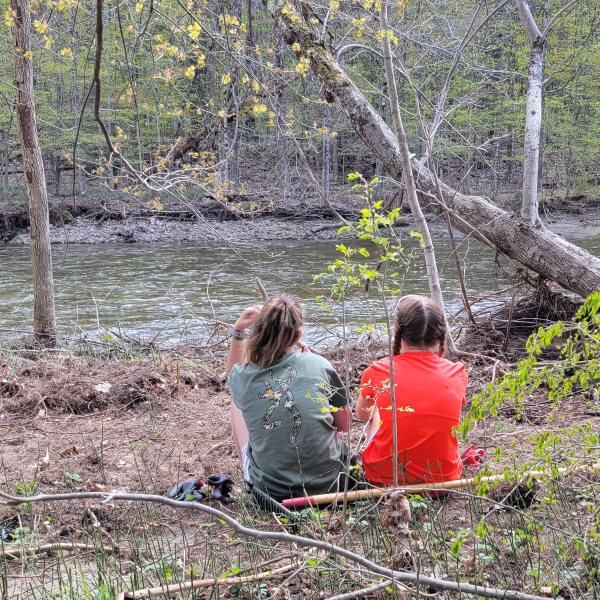
Proving the water quality piece was the next hurdle. While the committee members understood that the archaic septic systems in town were slowly leaching into local rivers – spreading nitrates, e coli, and other invisible pollutants – funding agencies needed data and proof rather than anecdotes.
For over two years, the Center and our partners on the wastewater committee worked with state agencies to understand what data they needed, from regulatory violations on existing systems, to water quality sampling, to documenting existing septic failures. With this guidance, the engineering team was able to find and document issues, highlighting that despite the appearance of clean water there were indeed major water quality problems.
All this effort worked. Projects receive funding based on their score relative to other projects, with affordability and water quality being major factors. In 2023, the project was ranked 184th in the state for new hardship grants and financing. As of 2025, the project is ranked 18th, which shows the hard work of the committee and the need for the project.
Moving Forward
The town is still many steps away from having the wastewater system it needs, but this grant from the NBRC is important fuel toward getting the full funding the town needs. With additional progress on the system design, project leaders will be able to make a compelling case as they advocate for the project and highlight the outsized impact that investing in a wastewater system will have on Elizabethtown’s future.
“With this design grant in hand, the committee is feeling confident about securing construction grants and other support this year,” said Karasin. “This is a huge project, and completion is still many years off, but after 70 years of waiting, we see a clear path forward to getting this done.”