The Process: From Woods to Rhythms
That journey begins in partnership with landowners and forest professionals. Bourgeois Guitars’ log buyer works with local loggers, foresters, and landowners in the Northern Forests to examine woodlots, identify trees suited to tonewood, explain the wood properties that are most highly valued, and procure logs. He, along with Bourgeois’ Master Sawyer, evaluates each log that is brought to the mill, providing feedback to ensure loggers are harvesting, and therefore, compensated for only the best tonewood trees.
From there, Bourgeois’ team breaks the log down little by little, examining the wood at every stage to ensure maximum quarter, minimal runout, and optimal clarity of grain within the part pattern. Finally, Dana himself examines and grades the tops before they are accepted into inventory.
“Prone to stain and rot from the outside in when stored for long periods of time, Red Spruce must be processed as quickly after its cut as possible. The local model we’re employing allows better use of the whole tree and generates far less waste,” said Fleming. “Even in responsibly managed forests, we only want to harvest what we need and nothing more.”
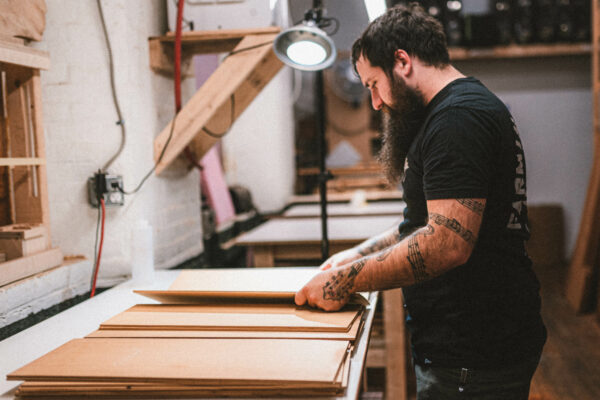
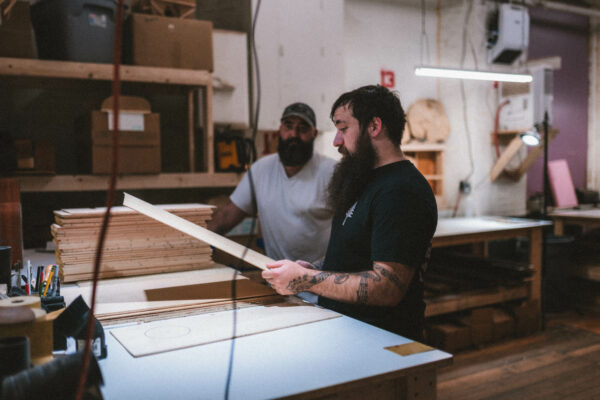
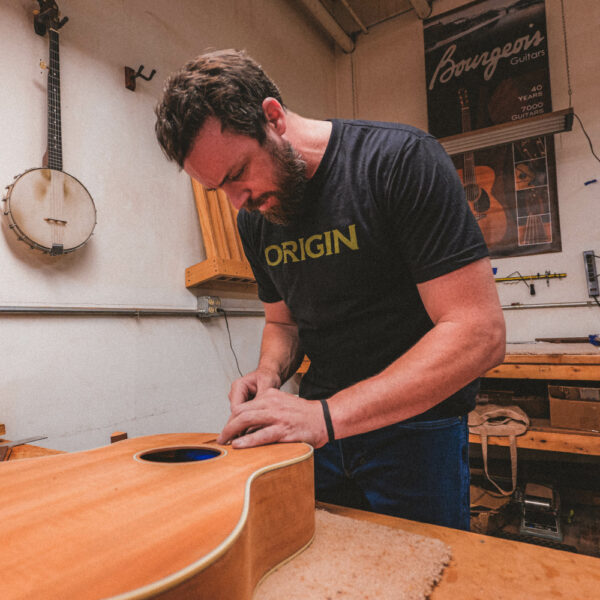
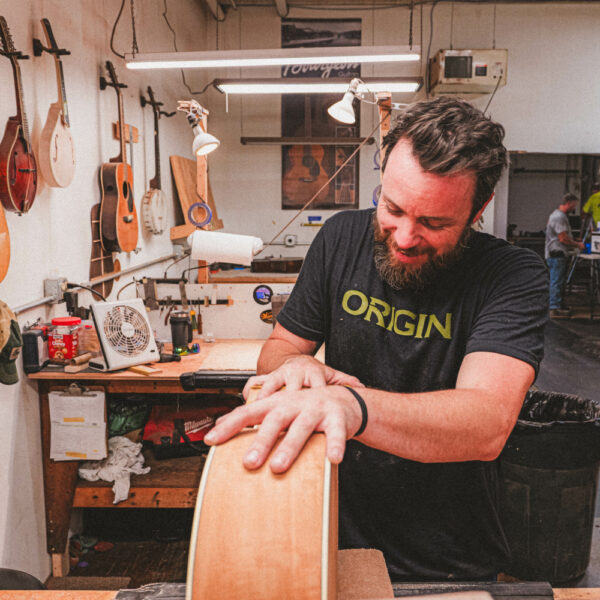
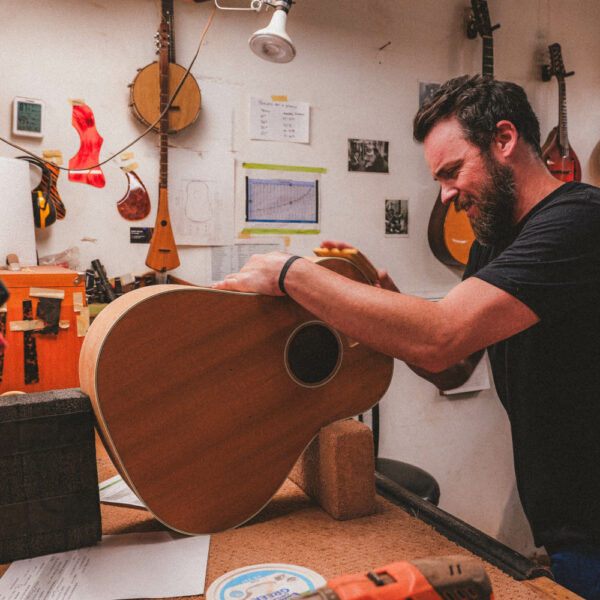
From the mill, the parts produced make their way down the road to Bourgeois Guitars, where a small team of highly-skilled luthiers hand-build custom guitars for players all over the world. The entire process, from tree harvest to finished guitar, happens within a small radius of the Lewiston guitar workshop.
Noting the strength of Maine’s brand and the global impact that the responsible use of Maine’s natural and human resources can have, Fleming remarked, “Our customers appreciate the same elegance and utility they’ve come to expect from Bourgeois, and now have the satisfaction of knowing their purchase supports healthy, sustainable forests and real people working in Maine’s rural economy.”
Bourgeois Guitars participated in the Center’s Telling Your Forest Story cohort, a program that helps local wood product businesses articulate their values to customers and helps increase awareness of sustainable forest management.
For Bourgeois, it was important to communicate that the Maine forest industry goes back generations and is now reinventing itself, creating the next generation of sustainable, forest economy businesses. It’s more than a local supply chain – it’s about preserving a way of life in rural America that is connected to the working landscape.
“It’s about investing in a strong forest economy. It’s about ensuring that when we harvest a tree, we create something that will last a lifetime,” said Dana Bourgeois. “Most importantly, it’s about building instruments that are not only beautiful in their own right, but that bring beauty, art, music, and human connection into the world.”