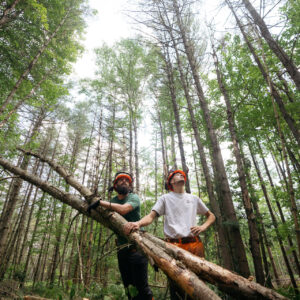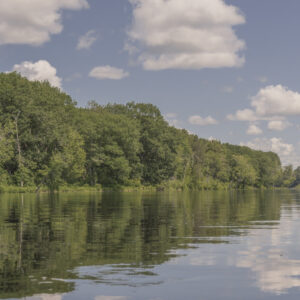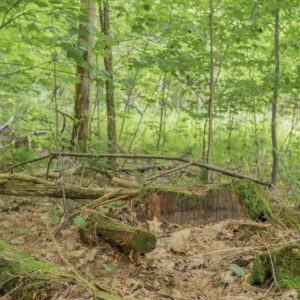
The White Mountain National Forest is a “land of many uses.” Photo by John Penney.
Managing National Forests: Stewarding For Generations Requires Balanced Approach
The Northern Forest Center supports the White Mountain National Forest in its management of public lands for diverse benefits.
While New England loses approximately 30,000 acres of forest annually to development and other non-forest land uses, national forests set aside land to provide essential ecological, economic, and social values to our communities.
A recent lawsuit trying to stop the White Mountain National Forest from harvesting timber in two areas, known as the Tarleton and Peabody projects, threatens to disrupt the Forest Service’s comprehensive management plan and the benefits it yields.
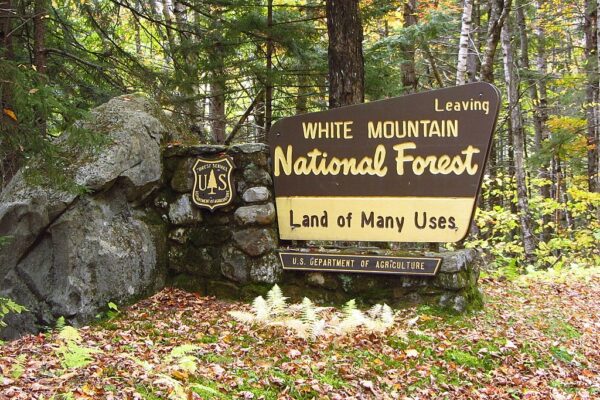
New Hampshire’s White Mountain National Forest is a “land of many uses,”, and the U.S. Forest Service uses an extensive public planning process to approach forest management sustainably. The agency’s management plans for the Tarleton and Peabody projects demonstrate sustainable stewardship in action.
These carefully planned – and widely publicly supported – timber harvests affect less than 1% of the total forest area while delivering multiple benefits including enhancing wildlife habitat, strengthening the forest’s resiliency to climate change, improving access and recreational opportunities, and providing a renewable resource – wood – that is used to build homes, make furniture, flooring and other societal needs.
Forest Plan Balances Multiple Uses Across Landscape
The forest plan, which was developed through extensive public participation and scientific evaluation, protects significant wilderness areas while allowing other sections to be actively managed for multiple uses. When forests are sustainably managed, the majority of trees remain and continue to store carbon. The areas that are harvested bring light to the forest floor, quickly filling it with new growth that pulls more carbon out of the air. Harvested trees will go on storing carbon in long-term products such as construction lumber and furniture.
The Northern Forest Center supports responsible, science-backed stewardship of national forest land and believes in the integrity of the Forest Service’s management planning process. We recently signed an amicus “friend-of-the-court” brief with 10 other organizations in response to the lawsuit which seeks to derail science and planning the Forest Service has invested in these plans.
The variety of organizations backing the Forest Service affirms the wide-ranging support for the “multiple use” approach to forest management. The signers’ interests include wildlife, environment, recreation, and forest products. Collectively, this group highly values the multifaceted benefits provided by this large, dynamic ecosystem protected by public ownership and management; this land will never be converted to non-forest use.
Arguments Against Harvesting Fall Short
It’s unfortunate that challenges such as the current lawsuit opposing the proposed management plans siphon resources from the already under-funded National Forests and delay important infrastructure improvements and projects – impacting neighboring communities, area businesses, and regional recreation enthusiasts. Arguments against including timber harvests in sustainable land stewardship ignore the complexities of forest systems: forests can simultaneously provide carbon storage as well as wildlife habitat, forest products, recreational access and more. Managing the forest for a single outcome is a detriment to long-term forest conservation and a disservice to the public.
Our greatest opportunity to address climate change through forests lies in keeping forests as forests— balancing conservation with active management that supports forest health, biodiversity, and a sustainable supply of renewable wood for future generations.
Partners on the amicus brief include the Society for the Protection of New Hampshire Forests, Appalachian Mountain Club, New Hampshire Wildlife Federation, Audubon Society of New Hampshire, New Hampshire Timberland Owners’ Association, Ruffed Grouse Society & American Woodcock Society, Granite State Division of the Society of American Foresters, the New Hampshire Chapter of the Nature Conservancy, and Charles Niebling (as an individual).