Northern Border Regional Commission at Risk
The current debate in Washington isn’t really centered on what programs and policies are worthwhile. If it were, we’d have longer conversations about the country’s needs, innovations to address them, and how to accelerate positive change in rural places. The real debate is about the very existence of government in our lives: where – and whether – federal regulations and funding have a place.
As we’ve discussed in previous writing, the administration is wielding a blunt instrument in this conversation, making assumptions about efficacy and ignoring current programs that align with its stated desire for a business-focused, growth-oriented, and streamlined approach to address the nation’s problems.
Case in point: the Northern Border Regional Commission, a highly effective entity slated for elimination in the President’s budget.
The Commission was designed to foster economic growth across a four-state region once known for innovation and prosperity, but that fell behind due to global economic changes. It’s remarkably flexible, nimble, and responsive to regional needs, whereas many other federal programs – while worthwhile – were established a generation ago and not always aligned to meet the complexity or dynamism challenging us today.
Over the past 15 years, the Commission has delivered $335 million into 720 critical local economic development projects. Each project was declared a local priority, endorsed by its respective state, and agreed to by the Commission as a whole. Together, these projects have attracted an additional $998 million in public and private funding and catalyzed local, state and regional economic growth.
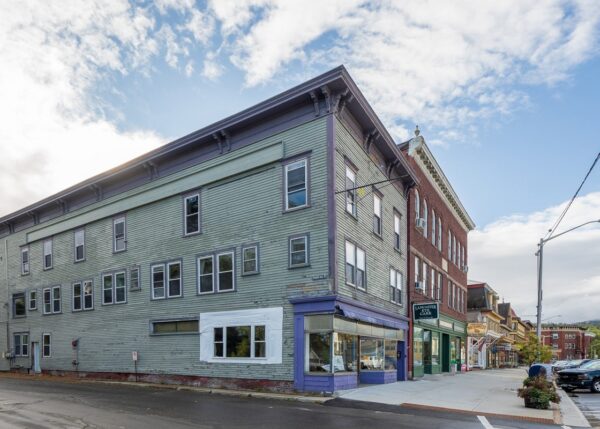
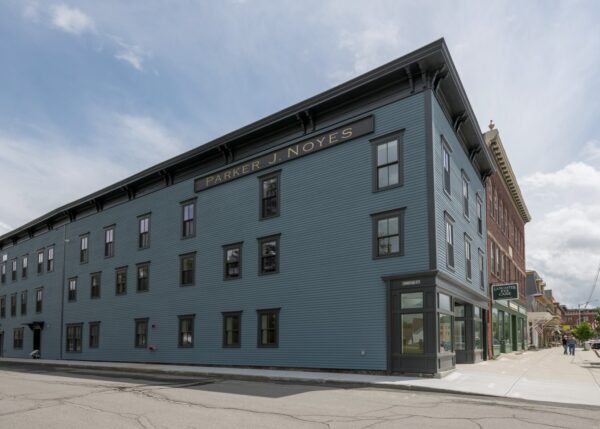
Without the Commission funding, many of these projects would never have happened. For example, the Northern Forest Center’s P.J. Noyes Building and 560 Railroad Street projects – two unique mixed-use redevelopments – were supported in part by a grant from the Commission. No other federal program had the flexibility to support our mixed-use, middle-income, historic preservation model. None. From any account. Only the Commission had the flexibility to fill a capital gap that allowed us to complete these transformative projects. Both buildings were nearly empty when we purchased them. Now, after over $9 million of total investment, the majority of it privately funded using debt and grants, these buildings with twelve apartments and three commercial spaces are shining examples of well-placed federal investments that created housing, attracted private project dollars, and led to additional investment in nearby buildings and projects in their communities.