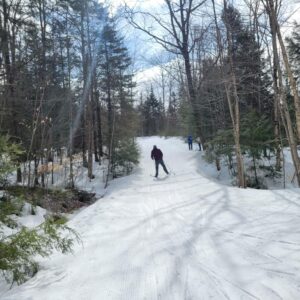
Students tour Johnson Outdoors in Old Town, Maine.
Maine Students Explore Outdoor Careers at Johnson Outdoors Manufacturing Facility in Old Town and the New England Outdoor Center in Millinocket
More than 30 students toured Johnson Outdoors’ manufacturing facility in Old Town, ME in April and the New England Outdoor Center (NEOC) in Millinocket, ME in May thanks to Extended Learning Opportunity (ELO) Programs designed to provide students with hands-on learning related to career exploration.
ELO coordinators work one-on-one with students to help them gain meaningful work experience, test the fields of work they think they’re interested in, and build relationships with mentors, community members, and potential employers. They also take groups of students out to experience workplaces like Johnson Outdoors, where students witnessed Old Town canoes and kayaks being made and learned about the creative, engineering, and marketing departments that work in concert to bring products from design to market.
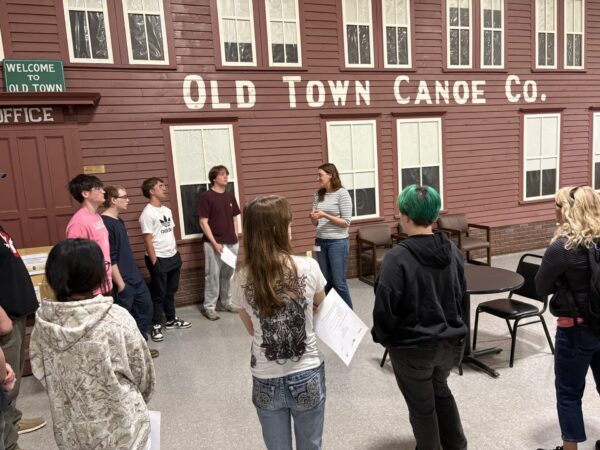
One Greenville student shared, “What impressed me most was seeing the process of how they make their canoes and kayaks. It’s way more advanced and complex than I expected. I was also surprised by how much they do to promote their products, even going out of the country.”
The Northern Forest Center secured funding for the ELO Programs through the US Department of Labor’s Workforce Opportunities for Rural Communities grant. The programs are serving hundreds of students in six schools in the Moosehead-Katahdin region. Implementation partners include Maine Outdoor Brands, Maine Development Foundation, and Rural Aspirations Project.
Johnson Outdoors is eager to share opportunities with Maine high school students. “Old Town has been building innovative boats for over 125 years in Maine, thanks to the talented people who work here,” said Garrett VanAtta, Director of Operations – Johnson Outdoors Camping and Watercraft. “Many of our employees are passionate and avid users of our products. We have a wide range of jobs and careers at Johnson Outdoors and it’s important that students see these opportunities firsthand. We were happy to welcome them to our Old Town facility and connect them with our team.”
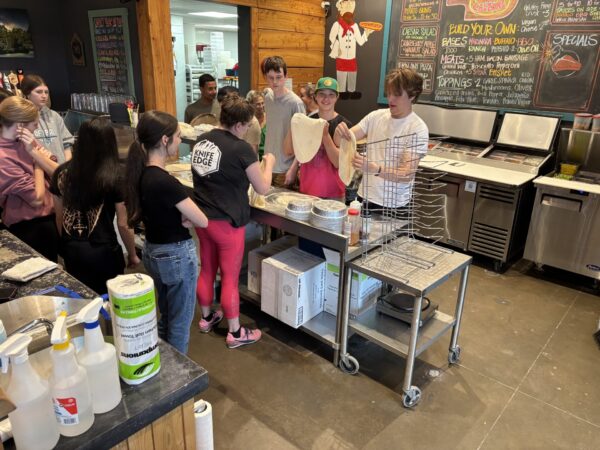
In May, New England Outdoor Center welcomed students for a second time this year, providing hands-on rotations through their outdoor recreation, hospitality, restaurant, and marketing departments. “NEOC values bringing local students in and sharing the meaningful and interesting careers available for them to pursue here in their own home region,” shared Val Locke from NEOC. “Connecting with our local schools is important to us.”
Alongside the ELO program development, Maine Outdoor Brands is working with industry partners to build K-16 Outdoor Recreation Career Pathways and create a career resource hub for educators and students. This hub helps students learn what careers in outdoor recreation look and feel like and provides resources that educators can use to help their students develop their own career path. “Our members at Maine Outdoor Brands have shared the challenges they face bringing young people into the workforce,” said Brian Threlkeld, Deputy Director, Maine Outdoor Brands. “At the same time, we know that the industry is growing rapidly. Our job is to close the loop and share with students the many kinds of careers that students can pursue in outdoor recreation in Maine.”
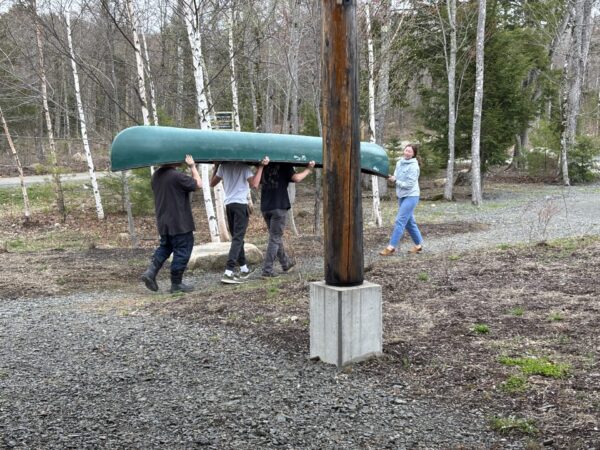
One student from Katahdin High School in Staceyville commented that the experience at NEOC “really opened my eyes to all of the opportunities and fun aspects to these different departments.” According to the ELO coordinators, students got a lot out of both trips, which really got them thinking about their futures. Kelly Edmunds-Francis, the ELO Coordinator from Katahdin even noted that on the entire drive home, all she heard was, “I actually learned something today” and “that was a cool experience.” Given the positive feedback from students, businesses, and ELO coordinators, the program will certainly continue to provide these experiences going forward and looks forward to connecting with more businesses.
Note: The three-year project will cost $1.9 million in total, with the federal WORC grant providing $1.2 million or 64 percent of the cost. The remaining $715,328, or 36 percent, will come from the school districts, which have varied sources of funding, and other grants secured by the nonprofit partners.