Community Forest Project Going Strong in Woodstock, Maine
With a grant award in January 2022 from the Land for Maine’s Future program, the town of Woodstock, Maine, has moved a step closer to its dream of founding the Buck’s Ledge Community Forest. The community has wanted to conserve this 634-acre parcel for more than 10 years and finally secured a purchase and sale agreement with the current owner in October 2021.
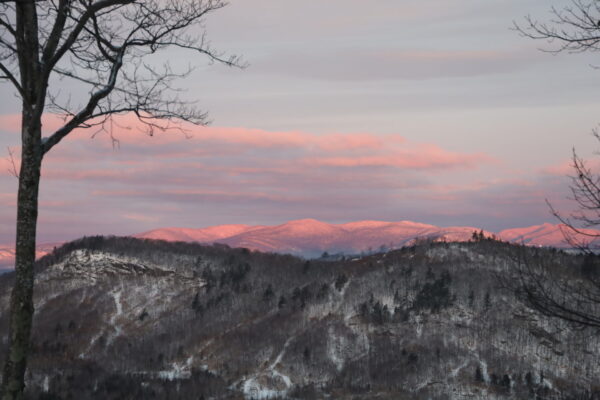
“The view from Buck’s Ledge is inarguably one of the best ‘bang-for-the-buck’ views in western Maine,” said Amy Wight Chapman in a recent blog about the project. “It overlooks North Pond, faces Mt. Abram, and provides stunning sunsets from the west-facing ledges.” Amy is one of dozens of volunteers supporting the project.
The granite face of Buck’s Ledge rises from the eastern shore of North Pond. It’s a magnet for recreationists, artists, and photographers. Lapham Ledge and the summit of Moody Mountain, also popular destinations, are included in the property. The town of Woodstock is in Oxford County, in the western mountains of Maine, just east of the White Mountain National Forest.
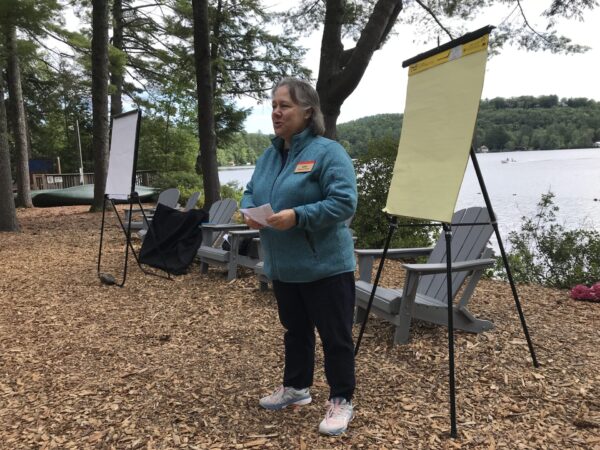
The Mahoosuc Land Trust and the Center are helping the Woodstock Conservation Commission manage the initiative to create the community forest. Center Program Director Julie Renaud Evans provides expertise to the planning committee, guides the process to write a management plan for the property, and helps build local capacity so residents will be able to manage the community forest for decades to come.
“Woodstock residents want to acquire this beloved and special property to permanently protect it,” said Evans, “to ensure that it will always remain undeveloped and accessible to residents and visitors. They will manage it for a wide range of community, economic, and environmental benefits, including recreation, education, water and wildlife habitat protection, and timber revenue.”
The property is threatened by the potential of real estate development due to strong demand for second homes and the town’s lack of zoning. Development, or liquidation harvesting if a new owner manages the forest for quick profits, would endanger the forest habitats, special communities, recreational access, and cultural resources offered by Buck’s Ledge parcel.
The proposed Community Forest encompasses 634 acres, including Buck’s Ledge, Lapham Ledge, and the summit of Moody Mountain. The parcel, well-known for hiking, snowshoeing, snowmobiling, and other traditional uses, includes rare plants, old growth trees, and nesting habitat for peregrine falcons.
A strong commitment to community trail building at Buck’s Ledge has extended the trail network to six miles and includes a trail that connects the Woodstock Elementary School to the property, allowing students easy access to use the forest as an outdoor classroom.
“The new trails connecting the school to the Community Forest will allow us to expand on the types of outdoor learning we can do with our students,” said Jessica Wilkey, teaching principal of Woodstock Elementary School. “Many schools across the country began to teach outdoors out of safety but soon discovered that outdoor learning provided more than fresh air. It helps students learn better, feel less stressed, and improves attention.”
Besides recreation and protection of ecological systems, the Buck’s Ledge property will have a sustainable timber management program focused on carbon sequestration and long-term growth of sawlogs. “Future harvest revenues can be used for improvements to the community forest such as trail building, habitat improvement, timber stand improvement and other projects,” said Evans. The town plans to use local foresters, loggers, and trucking firms to support the local industry and local jobs. The wood will be sent to regional mills further contributing to Maine’s forest products industry.
Woodstock committed $84,000 toward the project’s $868,000 estimated cost, and Land for Maine’s Future has awarded $307,500 to the project. Individual donors have contributed more than $100,000 so far and grant applications are pending with the US Forest Service’s Community Forest Program and several private foundations. Project managers hope to complete the project before the end of 2022.