From the Northern Forest to Boise and Back
Through my role at the Center, I have seen stories of interagency, municipal, and private and non-profit partnerships in trail and community development all throughout the Northern Forest. In Carrabassett Valley, Maine, the town, a local NEMBA chapter, Maine Huts and Trails, and Sugarloaf ski area all work together to help manage and promote year-round recreational opportunities on trails. In Franconia, NH, a NEMBA chapter, the town, a local land trust, dozens of private landowners, and the White Mountain National Forest also work together to manage an extensive network of multi-use trails. In fact, every one of the 16 networks of the Bike Borderlands collaborative relies on fostering and maintaining relationships with numerous parties.
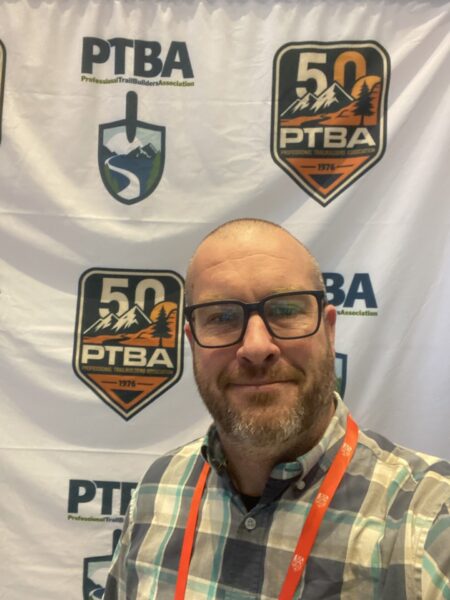 This spring, I had the honor of attending the Professional Trail Builders Association’s Sustainable Trail Building Conference in Boise, Idaho — and I kept seeing our region reflected back at me. The gathering took place April 14-16 and included professional trail builders, land managers, trail stewards, and other industry leaders for several days of learning, sharing, and networking, with workshops on trail planning, building, and maintenance, climate change impacts, volunteer recruitment, GIS tools, and much more.
The opening plenary celebrated PTBA’s 50-year anniversary and traced the progression of trail building through the years, followed by a presentation on how Boise developed into one of the most vibrant trail hubs in the country. Speakers discussed the partnerships between local, state, and federal agencies, non-profit and for-profit businesses, and the community at large — partnerships that have resulted in Boise now boasting over 200 miles of trails accessible from town. Certainly, what Boise has accomplished is worth studying and well deserving of accolades. But the ingredients that contributed to their success? We have them in abundance here in the Northern Forest as well.
One of the sessions I most enjoyed featured keynote speaker Dillon Osleger, a trail builder, earth scientist, and writer. Dillon encouraged everyone to think not just about how folks move through the landscape on a trail, or how to build trails sustainably, but why the trail should be built in the first place — and how it connects to local stories, both human and natural. He reminded us that trails provide an incredible opportunity for storytelling, particularly around stories of Indigenous knowledge and language. His debut book, Trail Work, will be published this year.
While Dillon was speaking, I found myself proud of the work our team at the Center has done to advance wayfinding projects and interpretive signage on trail projects in our region — on the Memphremagog Greenway in Newport, VT, in the Katahdin Region of Maine, and through a developing wayfinding project in Gorham, NH, among many other projects. His talk drove home why connecting people to a place and that place’s history is so important.
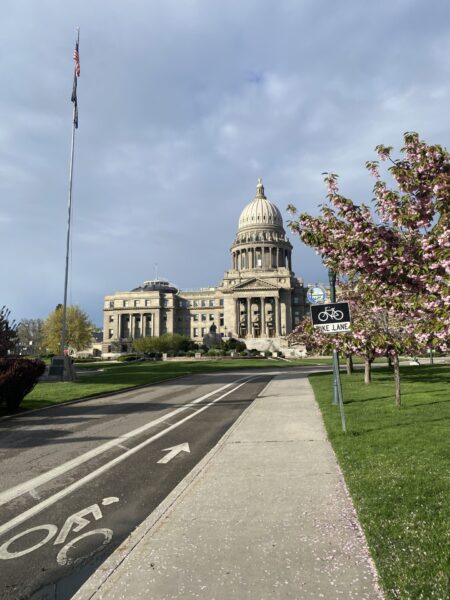 Beyond the engaging speakers, I was incredibly impressed by Boise’s bicycle and pedestrian infrastructure. Dedicated bike lanes, micro-mobility options at seemingly every street corner, excellent navigational signage, buses with bike racks, bike racks at seemingly every business, and even a bike parking garage inside a vehicular parking garage. I was a little envious — but I had to remind myself that this infrastructure didn’t appear overnight. It took years of planning, communication, partnerships, and strategic funding. Many little projects — like wayfinding signage, bike lane painting, and better trail connections — when added together, can have a transformative effect on a community.
I left the conference excited to share the knowledge I gained with our partners, but more importantly, confident in the fact that the Northern Forest, while already recognized as a world-class destination for outdoor recreation, is only going to get better, one little project at a time.
Please support our efforts to create safe, welcoming, and vibrant communities to live, work, and play in by making a donation to the Center.