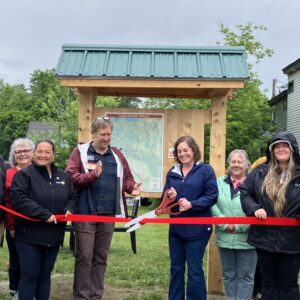
Lancaster, NH – 5/24/2019 – Lancaster downtown. (Ian MacLellan for Northern Forest Center)
Helping Lancaster Plan for Community Development
In rural towns, small teams of elected and appointed leaders – plus municipal staff, if there are any — tend to have more work to do than they can manage. The Town of Lancaster, along the Connecticut River in northern New Hampshire, is blessed with a talented professional staff and still doesn’t have time to tackle all the community development work they want to do.
Since we launched our community development work in 2018, we have worked with the town to plan infrastructure and visual improvements at the north end of Main Street near our redevelopment of the Parker J. Noyes building and have made an effort to create committees with diverse members, including young people who are often not represented. We believe it’s important for towns and projects to consider diverse perspectives and for town boards to be places where people can share new ideas.
While working with town officials on our major downtown building redevelopment and other projects to help build Lancaster’s appeal to potential residents, Center staff have tried to supplement the town’s planning capacity on a variety of projects.
For example, while town staff had begun updating the Master Plan, they needed help to conduct a survey that would gather input from a wider range of residents than usual. They wanted to engage teenagers, the elderly, people working in social services and many others. The Center worked with University of New Hampshire Cooperative Extension to assemble a diverse committee of people from the town who would help reach deep into the community. The committee created and distributed the survey, prompting response from many new voices. We also shared with the Master Plan team the results of a survey of local high school alumni that we conducted to learn their opinions regarding Lancaster as a place to live.
Center and Lancaster staff worked together to identify improvements for a 600-foot block of Bunker Hill Street, including new sidewalk and a total rebuild of sewage system that would separate storm water and sewage, and to seek significant funding for these needed infrastructure upgrades.
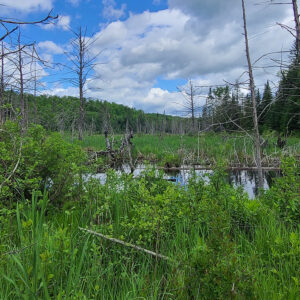
In another planning effort, Center Program Director Julie Renaud Evans continues to help with the Town Forest. The updated stewardship plan by a local forester focuses on timber production, and Julie and the team studied the feasibility of enlarging the Town Forest, explored possibilities for getting better access to the forest, and are working toward expanding the trail network.
In addition to professional expertise, Center staff are well networked with the professional resources that can help a town achieve its goals, as well as potential funding sources.