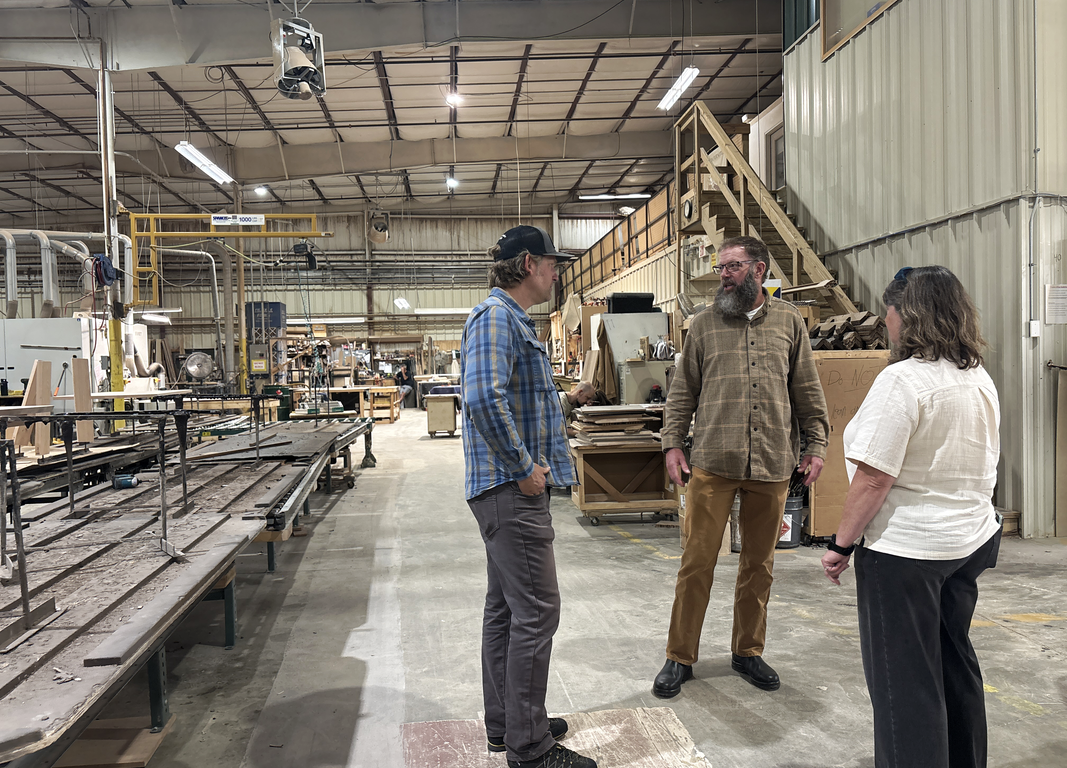
Brian Ball and Kirk Salo with Lyndon Furniture in St. Johnsbury, Vermont.
Lyndon Furniture continues to evolve
St. Johnsbury manufacturer expands capacity, finds new uses for waste

St. Johnsbury manufacturer expands capacity, finds new uses for waste
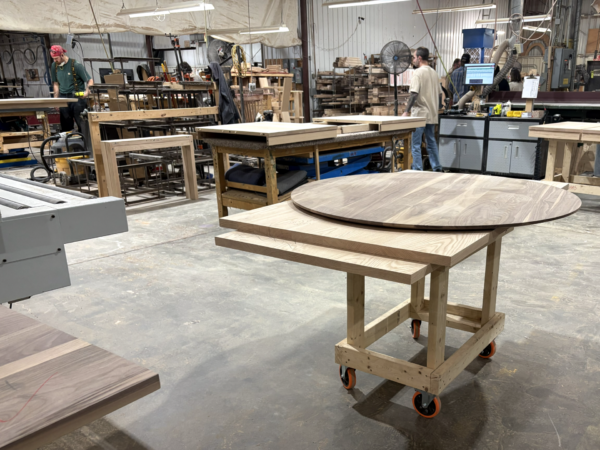
Walking through the manufacturing floor at Lyndon Furniture, there is an unusually large number of people using flashlights for a space with the lights already on. But it’s evidence of the care and precision Lyndon Furniture takes with its craftsmanship.
“Dining room tables are such a big surface, and dining rooms tend to be well-lit spaces,” owner Brian Ball said. “We have to be pretty flawless with what goes out from here.”
Lyndon Furniture, a solid-wood furniture manufacturer, has a been mainstay of the Lyndon and St. Johnsbury community for nearly 50 years. Over the years, Lyndon Furniture has shifted from cabinets to furniture, and then from branded products to contract manufacturing.
Today the company primarily supplies large retailers with their own branded products designed through a customer driven collaborative process.
Demand surged during COVID, and Ball and his team needed to expand capacity, particularly in milling. Ball — a member of the Northern Forest Center’s Northern Forest Board Forum — worked with the Center’s wood products business advisor Amy Robinson to help secure a grant that went towards equipment to increase throughput and efficiencies.
“Amy helped us from a grant standpoint. That was definitely a driver in getting some of that equipment as well,” Ball said. “We’ve been on a tear to modernize, just because we really desperately needed to handle the volume and to remain competitive in our market space, which was getting pretty challenging.”
He noted they invested in automated equipment to process material more quickly and expand capacity, which has also increased the amount of hardwood needed.
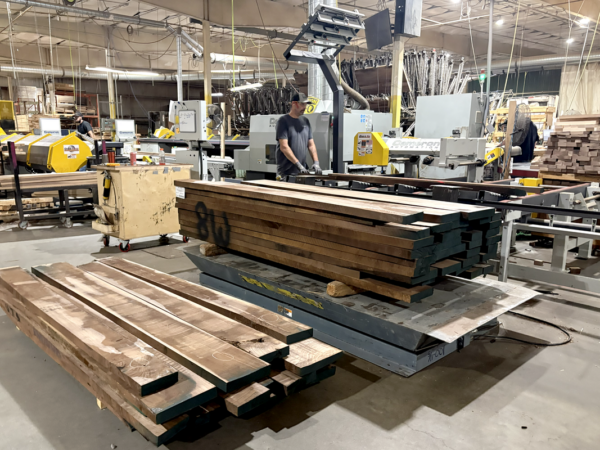
“We’re consuming about 1.5 million board feet of hardwood annually, and it’s all the domestic hardwood — cherry, maple, red oak, white oak, ash,” said Kirk Salo, Lyndon’s director of operations.
Lyndon Furniture’s lumber primarily comes from the East Coast, and he noted a shifting landscape because of the destruction caused by the emerald ash borer. “Ash is starting to go away. The supply of ash finally started to finish, where we’re phasing it out.” Now, they are starting to incorporate more red oak into their mix.
Ball and Salo are looking to reduce waste and improve efficiency — and they have their sights set on energy. They are also looking at converting waste into fuel for wood-fired heating systems as well as converting their own heating to wood-based.
“We’re going to start converting our scraps into sellable fuels, like for heating boilers and things like that. That’s probably the thing I’m most excited about,” Ball said. “Piggybacking on that, we’re probably going to add our own wood-fired system that will burn that same material, so be able to heat our facility with our waste byproduct.”
An ideal alternative to oil heat, modern wood heat uses fuel made from sawmill waste and sustainable forest management projects to provide a renewable heat resource that supports our forests while creating jobs and putting money back into local economies.
Wood has been at the heart of Lyndon Furniture since the beginning, when founder David Allard started cutting logs from his parents’ property and milling materials for a cabinet shop.
A few years later, then teenager Brian Ball did some odd jobs for Allard. He then returned in 1991 as the operation’s first rough cutter and later moved into shop performance and began taking on more leadership responsibilities. In 2013, he purchased the business.
“We’re happy to be such a big part of our local community,” Ball said. “We’re happy to be working with such an amazing natural resource. I mean it’s so, so much easier having a great story.
Ball is thinking about the future and who will be leading the company in 30 years. It’s a question shared by many businesses and communities across the Northern Forest, where attracting and retaining workers is an ongoing challenge. Ball noted though that working at Lyndon Furniture does not necessarily require specialized skills to start, and they are willing to train.
“We’ve provided livelihoods for a couple generations now,” Ball said. “I’ve got people working here now that weren’t born when I started working here, right? So, we’re a real important part of the community, and I take that very seriously.”
To compete in today’s marketplace, rural businesses need innovative systems, assistance with capital investment, fast internet, and direct consulting and training to meet critical needs. The Center offers a Wood Products Innovation Program that connects businesses with experts and helps fund investment to sustain good jobs in the region. The Center also offers one-on-one consulting and training to help businesses and non-profits make timely improvements to their digital marketing.