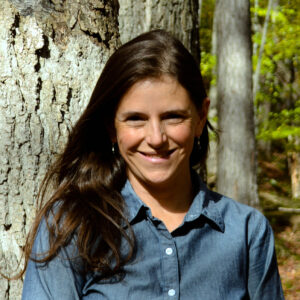
Kylie Cannan, Indian Lake, New York.
Photo: Eric Teed
Making a home in a hometown
Turning the Northern Forest Center’s know-how into a housing roadmap for Indian Lake
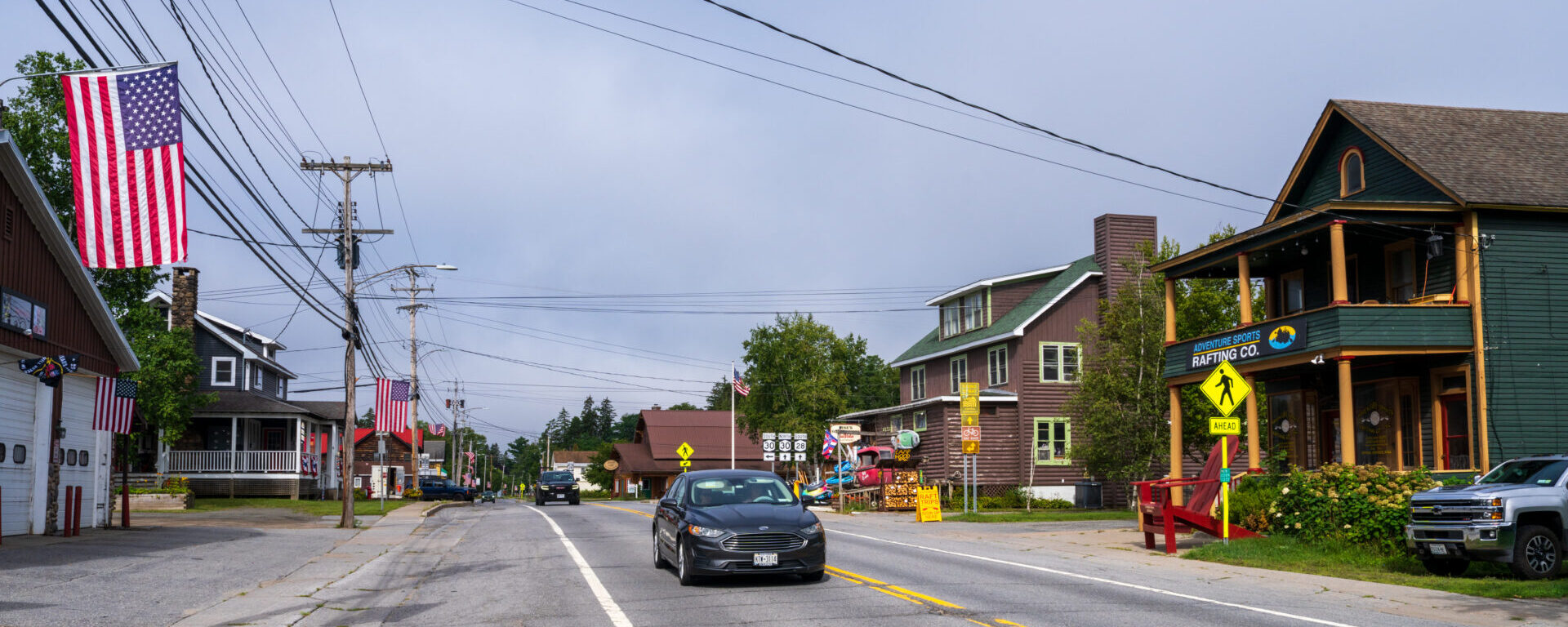
Kylie Cannan can walk the length of downtown Indian Lake, New York, in a few minutes — the red-brick school where she graduated, the restaurant and tavern where she still picks up shifts, a Stewart’s gas station, and storefronts that fill every year for the antique festival and go quiet again once the leaves fall.
Hamilton County, which sits entirely inside the Adirondack Park, is the least populated in New York, without a single permanent traffic light. Kylie left for Siena College in 2021 and came home with a marketing degree but no real plan for where she’d live. “I think Indian Lake is a place you don’t necessarily fully appreciate until you’ve left and come back,” she says.
Coming home wasn’t the hard part. Finding somewhere to live was. “I didn’t even really look, because I knew there probably wasn’t going to be a very great option for me,” she says. She moved in with her parents, then her boyfriend’s late grandmother’s house, before landing in her current apartment. “It’s not like you can Google ‘apartments near me,’” she says.
She sees the same story everywhere: friends bouncing between temporary arrangements, seasonal workers camping for lack of anywhere to rent. In Hamilton County, 87% of workers say they’ve struggled to find adequate housing, and 60% of employers say the shortage makes hiring harder.
That’s why the Indian Lake Housing Task Force wanted Kylie. By day she’s the town’s marketing and events assistant, not a housing expert, but she understands the housing need acutely and knows firsthand how much rent is too much for someone her age.
What’s at stake
A year ago, a young teacher at Indian Lake Central School was engaged to be married and ready to put down roots. He and his fiancée went looking for a house, hoping to start a family in the town where he’d landed his first job. Everything they could afford needed more work than they were prepared to take on. Everything move-in ready was priced past what a teacher’s salary could carry. Eventually, they stopped looking. He left the school, and Indian Lake lost more than a teacher. “We didn’t just lose an employee,” says Jeff Lemelson, an associate broker at Gadway Realty who shared the story at a recent local community meeting. “We lost whatever his kids might have done here, whatever businesses he might have opened.”
Turning experience into expertise communities can use
The Northern Forest Center didn’t set out to be a housing developer. “We got into housing because we saw a need to strengthen our communities, and to attract and retain young people,” says Leslie Karasin, who runs the Center’s Adirondack program. Over the past decade, that instinct has grown into a $22 million portfolio: 48 units active today, 28 more under construction across the Northern Forest region.
That pre-development know-how — what a renovation really costs, how to structure the financing, which hurdles stand between an idea and a finished home — is what the Center now brings to eight housing initiatives across the Adirondacks. A New York State Department of Environmental Conservation Smart Growth grant makes that possible, funding essential early work such as due diligence, master planning, and wetland delineation.
“We’re guiding communities through the pre-development process, identifying potential stumbling blocks, and positioning these projects to succeed,” Leslie says.
In Indian Lake, that support is aimed at The Commons: a 7-acre parcel with development potential, but plans that stalled in 2021. Since then, the project has shifted with the times. The original vision was a community center people could rent out; today, “The nation is facing a housing crisis,” says Christine Pouch, the town’s economic development, marketing, and events manager. “And so are we.”
With the Center’s expertise and this grant support the town is now developing an updated master plan and is deciding what happens next. “Because of the Northern Forest Center, we’re back on track,” Christine says. “We’re going to get across that finish line.”
The point of it all
For Leslie, Kylie is close to the point of it all: Indian Lake doesn’t have much of a future unless there’s some place for people to live. Kylie feels it too. “I hope things just continue to go upward,” she says, wanting to see the school grow instead of shrink.
“This first stage has really brought a lot of hope to our community,” she says. “Until people see something happen, they don’t really believe it’s actually being worked toward.” In Indian Lake, they’re starting to.
* This project is supported by the NYS Environmental Protection Fund, Adirondack Park Community Smart Growth Program.