The Dismantlement of the U.S. Forest Service Threatens the Health of Our Forests and Communities
At a time when our forests are more important than ever, the U.S. Department of Agriculture (USDA) has released a U.S. Forest Service (USFS) Reorganization Plan that authorizes the near elimination of place-based forest research that is the basis for sound forest management and increases the distance between the agency and practitioners. The Northern Forest Center is concerned that these changes are dismantling irreplaceable research capacity and expertise, further stretching USFS staff, and threatening valuable programs that serve forests and communities across the U.S.
Under the USFS Reorganization Plan announced on March 31st, USDA Secretary Rollins is authorizing:
- The closure of 55 of its 77 research facilities
- The relocation of its headquarters from Washington DC to Salt Lake City, Utah
- The transition from its regional structure to a state-based model in which 15 state directors and a small team oversee one or more states
What This Means for the Northern Forest
In the Northeast, research stations located in Bartlett, NH; Burlington, VT; Cortland, Lakeville, and New York City, NY; Westfield, MA; and Ansonia and Hamden, CT will close. Northeastern forests will no longer fall within the management of USFS Eastern Region 9 which includes 20 states plus Washington DC. Instead, they will be managed by a state director and small team, based in Warren, Pennsylvania, which will be responsible for 13 mid-Atlantic and Northeastern states.
In many cases, the research facilities targeted for closing represent unique and irreplaceable assets for understanding how forests work, and how to keep them healthy and productive in a time of increased stresses from climate change. For example, the Bartlett Experimental Forest located in the White Mountain National Forest of New Hampshire and encompassing 2,600 acres, is the longest-lived ecological research network in the nation, boasting 400 permanent research plots monitored across the last 90 years. The USFS established the research forest in 1931 to study northern hardwood forests and provide guidance for managing timber and wildlife habitat.
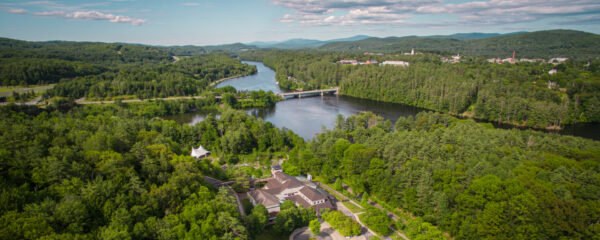
The Northern Research Station located on the University of Vermont’s campus in the George D. Aiken Forestry Sciences Laboratory located in South Burlington, Vermont represents over 50 years of long-term research on a variety of forest health issues, informing forest management across the region and beyond. The integrated partnership with the University of Vermont provided mutual benefit in the sharing of resources, academic advising, and professional opportunities for graduates.
Secretary Rollins claims that these changes serve to move “decision making closer to the forests and communities [the USFS] serves.” While 90% of USFS managed lands reside west of the Mississippi River, the plan ignores several key facts that justify the need for USFS research and operations located in the Northeast. The 30-million-acre Northern Forest region, home to the Green Mountain and White Mountain National Forests, represents some of the most biodiverse forests in our country and provides direct benefits to over 90 million people located within a day’s drive.
This region is also home to the most forested states in the U.S. with Maine and New Hampshire ranking one and two at 88% and 84% forested respectively. The USFS works well beyond the bounds of national forests – serving every county of the U.S. to promote forest health, protect ecosystem services, and develop domestic wood markets.
The Northern Forest is not immune to the variety of stressors that threaten the nation’s forests – 2025 demonstrated that in abundance with problems ranging from the worst summer drought ever recorded in New Hampshire history to the spread of beech leaf disease to every county in Maine.
Our forests need us more than ever before, and we need them. This begins with strengthening – not weakening – the USFS, funding forest research equally across the nation, and ensuring that on-the-ground practitioners have access to agency staff and programs.
This administration has already subjected the USFS to severe staff cuts and proposed elimination of many of its programs. On top of that, the closure of research facilities and consolidation of regional offices into a much smaller set of offices with politically appointed leadership suggests an intent to demolish the Forest Service, not strengthen it.
We ask our federal legislative branch, here in the Northeast and nationally, to use the tools of legislation and appropriation to protect the research capacity of the USFS and ensure equitable access to its programs across the U.S.