“Forests Won’t Fix Themselves”: Reflections on Ecological Forestry in Practice
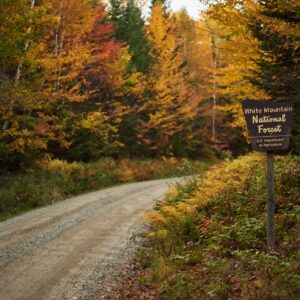
Growing up, the forests and mountains of Northern New Hampshire were a place to connect with my family, myself, and the natural world. To this day, the smell of sun-warmed pine needles instantly transports me to the place we always camped, making forts in the woods, and the seemingly endless summer days of my childhood. My sister often says, “We’re all better people when we’re outside,” and I’d add “especially in the woods.”
My work at the Center has only deepened my relationship with the forest, giving me a broader lens: forests not as “other,” but as a part of the fabric woven through communities across the Northern Forest. A deep commitment to forest stewardship is essential to ensuring that this reciprocal relationship can endure.
Defining Ecological Forestry
Forest stewardship goes by many names — good, sustainable, climate-smart, active, responsible — but the approach most aligned with our values, one that encourages landscape diversity and puts the needs of the forest on even footing with the goals of the landowner, has a name: ecological forestry.
Ecological forestry isn’t new. Whether specially named or not, it is the type of forestry most foresters have been practicing for decades. But the profile of this approach has been elevated in recent years because it inherently addresses many of the forest stressors amplified by a changing climate. (Center President Rob Riley shared his appreciation for ecological forestry last fall through our Forest Advocate series.)
The definition that speaks to us, borrowed heavily from Ecological Silviculture by Dr. Brian Palik of the U.S. Forest Service, and from Dr. Tony D’Amato at the University of Vermont, is this: Ecological forestry is a management approach that applies an understanding of the structure, function, and dynamics of natural forest ecosystems to achieve integrated environmental, economic, and social outcomes. In other words, it is forestry guided by landowner goals and what is appropriate for the forest, not just what is most efficient for growing trees to commercial size.
Listening to the People Who Manage Our Forests
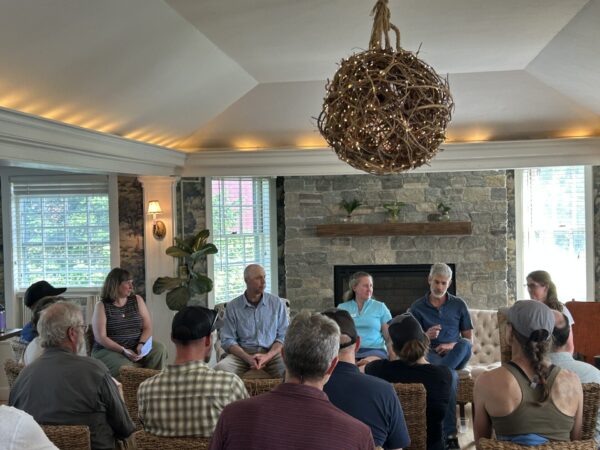
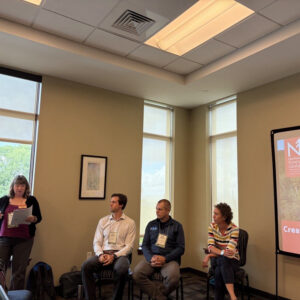
To ground our thinking in the practical realities that forest managers encounter, I recently moderated a panel in Franconia, New Hampshire to broaden Center board and staff understanding of ecological forestry in practice. Ross Caron, a procurement forester for Cersosimo Lumber, Wendy Weisiger, Managing Forester for the Society for the Protection of New Hampshire Forests, Jesse Mohr, a consulting forester with Native Geographic Consulting, and Elise Lawson, a consulting wildlife biologist and wetland scientist with Watershed to Wildlife, each brought a distinct, lived experience and expertise.