Next Generation of Foresters
I cringe when foresters are caricatured as a uniformed park ranger or a flannel clad lumberjack. Those of us who work in the woods know foresters as people, not caricatures. We’re individuals who are scientists, ecologists, policymakers, conservationists, land managers, educators, and planners, often all rolled into one! To steward the forest, we bring years of formal schooling, state licensing, practical knowledge, reflective instincts, and a love and passion for the natural world and its systems. Our work is always with the future in mind because forests take a long time to grow.
While not all foresters are the same in how they approach forest stands, most are doing their best to manage landowner financial expectations, natural cycles, wood markets, and habitat needs. Additionally, we now consider carbon, climate, and resiliency in our management considerations and recommendations. However, in some policy discussions today, we are caricatured once again as ones who cut trees for straight financial gain without regard to natural systems thinking, long-term ecological benefit, or global carbon impact. The truth is quite the opposite, foresters understand systems and consequences of actions on multiple scales, from forest stand to regional landscape, from today to 100 years from now, from the landowner’s goals to global impact. This is how we are trained to think and to take appropriate action on the ground to meet multiple goals.
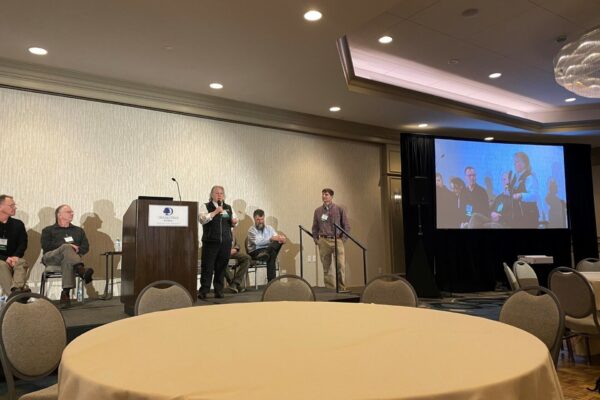
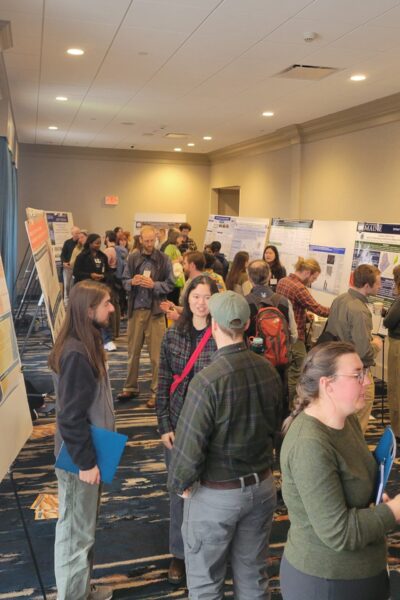
As a forester myself, I attend the annual meeting of the New England Society of American Foresters (NESAF) every year. It is consistently a great event, with strong educational programming and social opportunities to meet with peers; we gather to learn, share, and inspire each other about the future of the Northern Forest and beyond.
This year, there was a noticeable difference in the room, perhaps there was even a little less flannel as hundreds of dedicated professionals came together to learn and support each other as our profession shifts in the context of climate change. With a usual attendance of 350, this year’s event, hosted in Burlington, far exceeded that number with more than 500.